
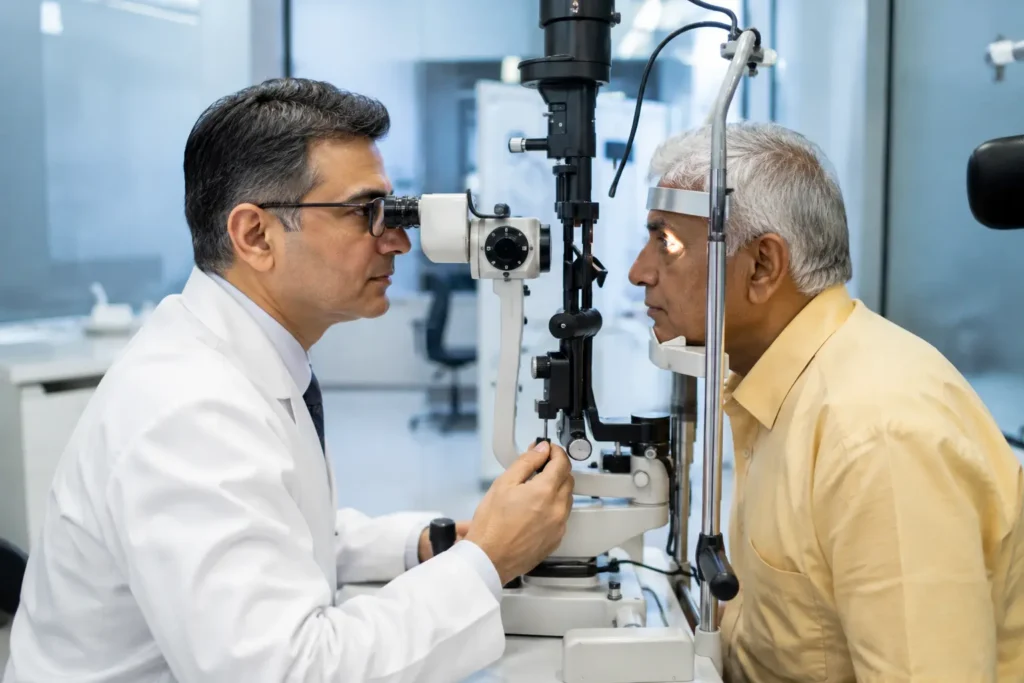
Clear vision depends on the eye’s natural lens being able to focus light properly. As we get older, this lens can become cloudy, leading to cataracts and gradually affecting everyday activities. IOL eye surgery is one of the common ways to restore vision in these situations.
Key Takeaways
- IOLs replace the natural lens removed during cataract surgery.
- Different IOL types are designed for different vision needs.
- Eye measurements help determine the appropriate IOL power and type.
- Recovery varies, so following postoperative instructions is important.
The IOL is placed inside the eye and remains there permanently, helping focus incoming light properly onto the retina for clearer vision.IOLs are commonly implanted as part of cataract surgery, although the type of lens selected can vary from person to person. The ophthalmologist generally considers factors such as the overall health of the eye, the patient’s vision needs, daily activities, and lifestyle before recommending the most suitable IOL.
Also Read:
What Is IOL Eye Surgery?
IOL eye surgery refers to the implantation of an intraocular lens inside the eye. In a typical cataract procedure, the surgeon removes the cloudy natural lens and places an IOL in its position.
The artificial lens is designed to provide clearer vision by helping the eye focus light correctly. Since the procedure is usually performed as an outpatient treatment, patients can generally go home after a short period of observation.
The final result can vary depending on the condition of the eye and whether other vision problems are present.
When Might an IOL Eye Surgery Be Recommended?
IOL implantation is commonly associated with cataract treatment, but it may also be considered for certain types of refractive correction.
A doctor may discuss IOL surgery when a patient has:
- A cataract that is interfering with normal activities
- Certain levels of nearsightedness or farsightedness
- Astigmatism that may be treated with a toric lens
- Presbyopia, where a suitable premium lens may be an option
- A need for lens-based vision correction rather than laser eye surgery
A detailed examination is needed before making a decision.
Different Types of IOL Eye Surgerys
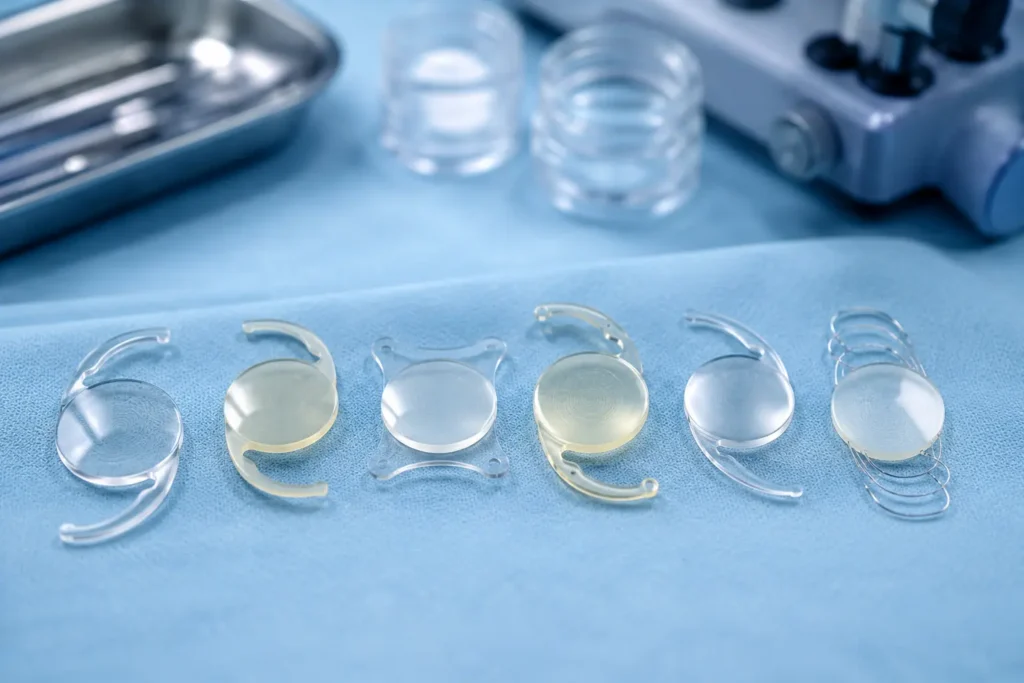
IOLs are not all designed to provide the same type of vision. Your surgeon will recommend an option based on your eyes and what you expect from the surgery.
| IOL Type | What It Is Designed For | Possible Need for Glasses |
| Monofocal IOL | Clear vision mainly at one distance | Glasses may be needed for other distances |
| Multifocal IOL | Provides vision across more than one distance | Some people may need fewer glasses |
| EDOF IOL | Provides a broader range of functional vision | Reading glasses may still be useful |
| Toric IOL | Helps correct astigmatism | Depends on the remaining prescription |
No lens is automatically the best choice for every patient. Factors such as corneal health, retinal condition, prescription, and daily activities all matter.
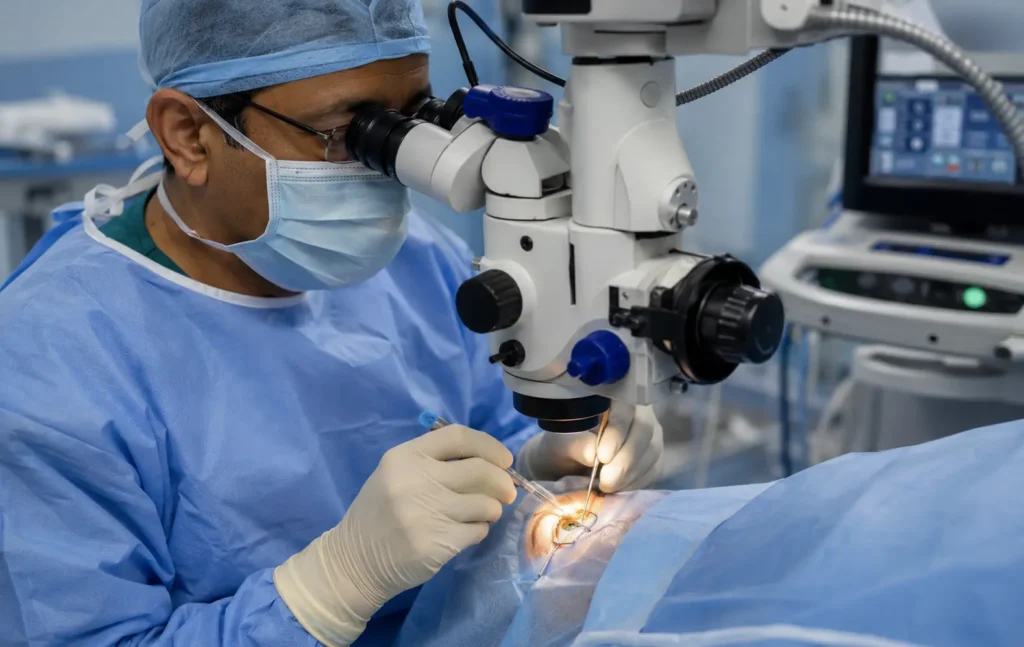
What Happens During IOL Eye Surgery?
Before IOL surgery, the eye is examined and measured in detail. These measurements help the ophthalmologist calculate the correct lens power based on the patient’s individual vision needs.
Although the technique may vary, IOL surgery generally follows these steps:
- Preparing the eye:The eye is numbed with eye drops or local anesthesia to keep the patient comfortable during the procedure.
- Making a small incision: The surgeon creates a tiny opening in the eye to access the natural lens.
- Removing the natural lens:When the procedure is performed as part of cataract surgery, the cloudy natural lens is gently broken into smaller pieces and removed from the eye.
- Placing the IOL: The selected intraocular lens is inserted through the small incision and positioned inside the eye, typically within the capsule that previously held the natural lens.
- Completing the procedure:The surgeon makes sure the IOL is correctly positioned and checks the eye before finishing the operation.
The procedure and surgical technique can vary depending on the condition of the eye, the type of IOL being used, and the surgeon’s clinical approach.
Also Read:DCT Eye Surgery: Works, and Recovery
What Are the Benefits of IOL Eye Surgery?
For an appropriate patient, IOL implantation can make a significant difference in day-to-day vision.
Potential benefits include:
- Clearer vision after cataract removal
- Correction of certain refractive errors
- Treatment of astigmatism with an appropriate toric IOL
- Less dependence on glasses for some patients
- Better ability to read, drive, work, or carry out everyday tasks
- Long-term correction without having to remove the implanted lens routinely
The improvement someone experiences depends not only on the IOL but also on the overall health of the eye.
Recovery After IOL Eye Surgery
Recovery is generally gradual. Some people notice better vision relatively soon, while others need more time for their vision to stabilize.
It is normal to experience some temporary discomfort, watering, mild sensitivity to light, or blurred vision during the early healing period.
After surgery, patients should:
- Take prescribed eye drops as instructed
- Do not rub, touch, or apply pressure to the operated eye.
- Keep follow-up appointments
- Follow the surgeon’s advice about physical activities
- Seek medical attention if they develop severe pain, sudden vision loss, marked redness, or other concerning symptoms
The surgeon will provide specific instructions based on the patient’s procedure and recovery.
Frequently Asked Questions
Is IOL Eye Surgery the same as cataract surgery?
No. Cataract surgery involves removing a cloudy natural lens. An IOL is the artificial lens that is implanted to replace it. IOL implantation is therefore an important part of modern cataract surgery.
How long does an IOL stay in the eye?
An IOL is intended to remain in the eye permanently. Routine replacement is generally not required, although other eye problems can affect vision later.
Can an IOL correct astigmatism?
Yes. A toric IOL can correct certain amounts of astigmatism. Whether it is suitable depends on detailed measurements of the eye.
Will I need glasses after IOL surgery?
Possibly. The answer depends on the IOL selected and the patient’s vision. Some lenses are designed to reduce dependence on glasses, but they do not guarantee that glasses will never be needed.
Is everyone suitable for IOL surgery?
No. An ophthalmologist needs to examine the eye before recommending surgery.