
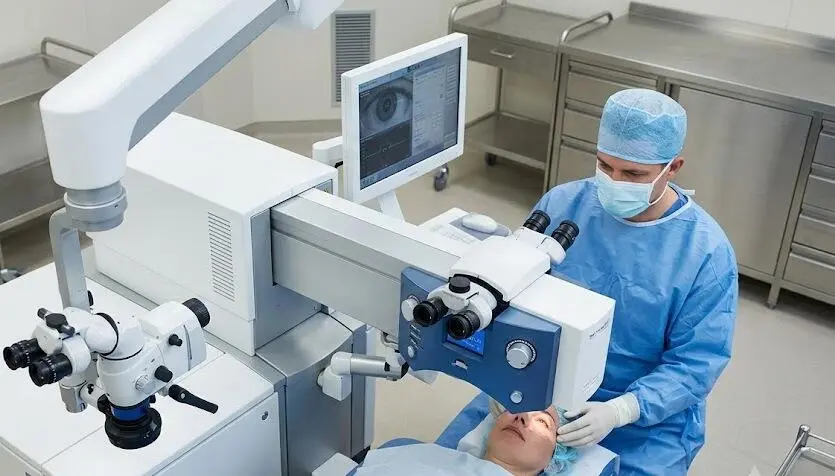
SmartSurf eye surgery is a laser vision correction method that reshapes the cornea without a blade, a flap or any instrument touching its surface. If you are tired of glasses and contact lenses, it is one of the newer options a surgeon may suggest.
The name causes some confusion, because many clinics call it SmartSurf LASIK even though it works differently from classic LASIK. This guide explains how it works, who it suits, what recovery feels like and where the risks lie.
Key Takeaways
- SmartSurf eye surgery is a surface laser treatment. In medical terms, it is TransPRK performed with SmartPulse technology.
- It uses no flap, blade or suction, which helps people with thin corneas or active lives.
- Expect a few days of discomfort and weeks of gradual sharpening; LASIK usually feels faster at first.
- Possible downsides include temporary haze, glare, fluctuating vision and, rarely, infection.
- Eligibility depends on a stable prescription and healthy, thick-enough corneas.
- Compare what a quote includes, not just the headline price.
What Is SmartSurf Eye Surgery?
It combines two ideas. TransPRK is a surface method in which one excimer laser removes the cornea’s thin outer layer, the epithelium, and reshapes the tissue beneath in a single run. SmartPulse technology then arranges the laser pulses so the surface comes out smoother and heals faster than with older methods.
Schwind makes the system, which runs on its Amaris laser platform, and markets it as SmartSurfACE. Clinics usually shorten that to SmartSurf.
The system runs on the Amaris 1050RS excimer laser. It pairs high-speed eye tracking, which follows eye movement in several directions including rotation, with detailed corneal mapping that guides the treatment. Some clinics describe this as 7-D eye tracking.
SmartSurfACE has been in use since 2008, and one provider reports more than 825,000 touchless treatments performed since its launch.
Where does LASIK fit in? Strictly, it does not. Classic LASIK cuts a thin corneal flap before the laser is applied. SmartSurf LASIK, as some clinics label it, treats the surface directly, so no flap is ever made. It is a marketing name, not a separate technique, so ask your surgeon to explain exactly what will be done. That helps you judge any clinic’s SmartSurf eye surgery offer fairly.
Touchless, Flapless SmartSurf LASIK: What the Terms Mean
You will see SmartSurf described as touchless, no-touch and flapless. Touchless and no-touch mean that no instrument contacts the eye during the laser step, because the laser removes the surface layer itself. Flapless means no corneal flap is cut, which is what separates it from classic LASIK. When a clinic advertises SmartSurf LASIK, it is describing this same flapless, touchless surface treatment.
How the Procedure Works, Step by Step
- Assessment. Your surgeon checks your prescription, maps the cornea, measures its thickness and tests your tears. Contact lens wearers usually stop wearing them first, so the cornea regains its natural shape.
- Preparation. Numbing drops go in and a small holder keeps your lids open. No instrument touches the corneal surface.
- Laser treatment. You look at a fixed light while an eye tracker follows tiny movements. The laser removes the epithelium and reshapes the cornea in one pass, usually in under a minute per eye.
- Protection. A soft bandage lens acts as a dressing while the surface heals.
- Aftercare. You go home with drops, sunglasses and instructions, then return for check-ups.
SmartSurf Eye Surgery vs LASIK and SMILE
Each option trades speed against safety margins in a different way. Here is how they compare.
| Feature | SmartSurf | LASIK | SMILE |
| Corneal cut | None; the laser treats the surface | A thin flap is created | A small incision removes a lenticule |
| Early comfort | Several days of soreness | Usually mild | Usually mild |
| Visual recovery | Gradual, over weeks | Often within a day or two | Days to a couple of weeks |
| Dry eye | Lower risk than LASIK | Higher risk early on | Lower than LASIK in many studies |
| Thin corneas | Often suitable | Often unsuitable | Depends on thickness |
TransPRK also improves on older PRK, which cleared the epithelium with alcohol or a brush. A 2022 review of the three approaches found that surface treatment gave the strongest corneal stability but also the slowest, least comfortable recovery.
In short, LASIK suits thicker corneas and a need for speed. SmartSurf suits people who want to avoid a flap or have thinner corneas.
SmartSurf LASIK vs Contoura Vision
Contoura Vision is a topography-guided form of LASIK, so it still creates a corneal flap. SmartSurf is flapless and works on the surface. Clinics that offer SmartSurf often point to its larger number of corneal data points and its rotation-adjusting eye tracking, but these are manufacturer and clinic claims, so ask for evidence rather than relying on the numbers.
Contoura suits thicker corneas and people who want the fastest early recovery. SmartSurf suits thinner corneas, dry-eye concerns and active lifestyles. Your corneal map and thickness should decide, not the brand name.
Who Is a Good Candidate?
Not everyone who asks about SmartSurf eye surgery gets the green light. Your eyes decide, not your wish to drop glasses.
You may be suitable if you:
- are 18 or older with a prescription stable for about a year
- have healthy corneas that are thick enough for surface treatment
- have corneas too thin for LASIK, or play contact sports
You may be advised against it if you:
- have keratoconus or an irregular corneal shape
- have a changing prescription, severe dry eye or an active eye infection
- are pregnant or breastfeeding, which is usually a temporary reason to wait
- have an autoimmune condition that affects healing
- expect perfect vision for life
Age matters too. The treatment corrects distance vision but cannot stop the lens stiffening naturally, so reading glasses are likely from the mid-forties. The correctable range varies by laser and clinic, and corneal thickness often sets the limit before the prescription does.
Benefits of SmartSurf Laser Eye Surgery
The strongest argument for this treatment is what it avoids. There is no flap to dislodge, no suction ring and no blade, so flap-related complications are off the table. That matters for athletes and anyone who gets knocked about.
It can also suit thinner corneas, carries a lower dry-eye risk than LASIK because no flap is cut, and uses no alcohol on the eye.
Published results back this up. In one study of SmartPulse treatment for moderate to high myopia, about 89% of eyes had completely clear corneas at six months, and nearly all patients reported no dry eye.
Risks and Side Effects of SmartSurf Eye Surgery
Some clinic pages describe SmartSurf laser eye surgery as risk-free. No surgery is.
- Early discomfort. Burning, watering and light sensitivity last two or three days. A few studies found early pain slightly higher than with older PRK, so ask how your surgeon manages it.
- Haze. A thin cloudiness can appear while the cornea heals. It is usually mild and fades. Steroid drops, sunglasses and sometimes mitomycin C help prevent it.
- Glare, halos and slower recovery. Vision starts blurry and sharpens over weeks, not days.
- Under- or over-correction. A touch-up is sometimes needed, which means another surface healing period.
- Infection. It is rare but serious, which is why the drops matter.
Call your clinic the same day if pain worsens after day three or four, vision drops suddenly, or you see thick yellow or green discharge.
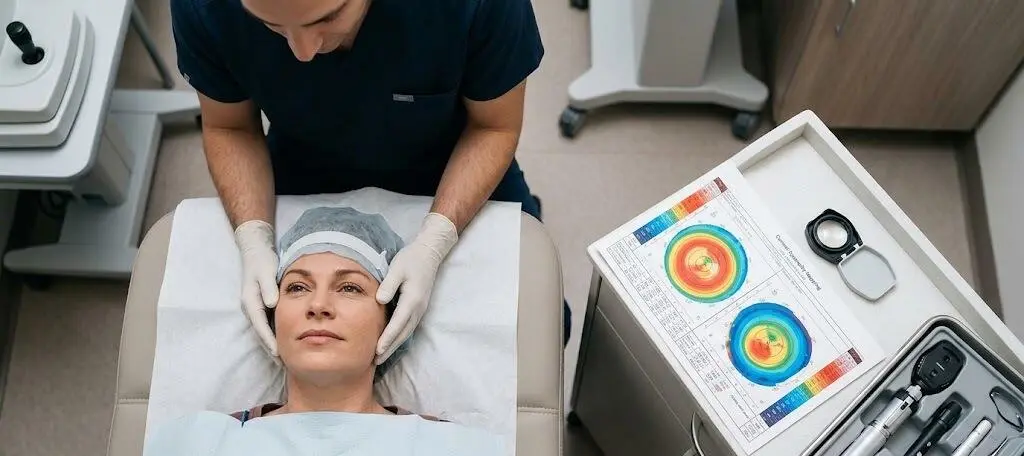
Recovery After SmartSurf Eye Surgery
Everyone heals at a different pace, but the pattern is fairly predictable.
- Days 1 to 3: soreness, tearing and light sensitivity. Rest and use your drops.
- Days 3 to 7: the bandage lens comes out once the surface closes. Vision often dips briefly, then improves.
- Weeks 1 to 4: vision sharpens but can fluctuate. Most people manage daily tasks.
- Months 1 to 3: the prescription settles and final clarity arrives. Some people need longer.
Do not rub your eyes, keep water and dust away for the first week, wear sunglasses outdoors and skip eye makeup for about ten days. Do not drive until you are cleared. Gym, swimming and contact sports return in stages over two weeks to three months, so follow your surgeon’s schedule.
Steroid drops are tapered over several weeks. Stopping early raises the risk of haze.
What Does It Cost?
SmartSurf eye surgery costs vary widely between countries, cities and clinics, so a single figure would mislead you. When you compare quotes, check that the fee covers pre-operative tests, both eyes, medicines, follow-up visits and the policy if a touch-up is needed.
As a rough guide, clinic price lists in India commonly put SmartSurf LASIK at about ₹40,000 to ₹45,000 per eye, while some premium centres list packages near ₹1,20,000. Prices in other countries differ, so treat these figures only as a starting point for comparison.
A low headline price that leaves out follow-ups can end up costing more. Ask why you suit this procedure rather than LASIK or SMILE, and how the clinic handles pain and haze.
Frequently Asked Questions
Is SmartSurf eye surgery safe?
For well-screened patients it is considered safe and effective, with good published results and low rates of serious problems. Safety still depends on thorough testing and strict aftercare. Haze, infection and regression are uncommon, but your surgeon should explain them first.
Is SmartSurf laser eye surgery better than LASIK?
Neither is better for everyone. LASIK recovers faster. SmartSurf avoids a flap, which can suit thin corneas, dry eyes and contact sports. Your corneal thickness, prescription and lifestyle decide.
Is SmartSurf eye surgery painful?
The treatment itself is not painful, because numbing drops are used. Recovery is the harder part: burning, watering and light sensitivity usually last two or three days, and your surgeon can recommend pain relief. Pain that worsens after day three or four needs a call to the clinic.
How long does it take to see clearly after SmartSurf?
Many people manage daily tasks within one to two weeks, and vision keeps sharpening over the first month. Full stability usually takes one to three months.
Is SmartSurf eye surgery permanent?
The reshaping is permanent, but your eyes can still change. Your prescription may drift slightly, reading glasses are likely in your forties or fifties, and cataracts may develop later. Occasionally a touch-up is needed.
How long does SmartSurf eye surgery take?
The laser itself works for only tens of seconds per eye. With numbing drops, positioning and the bandage lens, expect roughly 5 to 15 minutes per eye in the treatment room.
When can I return to work after SmartSurf?
Most people take three to seven days off, until the bandage lens is out and the soreness has eased. Jobs that involve dust, screens for long hours or physical strain may need longer, so follow your surgeon’s advice.
What is the success rate of SmartSurf eye surgery?
Published results are encouraging. In one small series of 50 eyes, average uncorrected vision at three months was better than 20/20 and no complications were reported. Another study found about 89% of eyes had completely clear corneas at six months. Individual results depend on your prescription and healing.
How much does SmartSurf eye surgery cost?
Many Indian clinics list roughly ₹40,000 to ₹45,000 per eye, and some premium centres charge more. Check what the quote includes, such as tests, follow-ups and touch-ups, before comparing prices.
Bottom Line
SmartSurf eye surgery offers flap-free laser correction with strong corneal stability, and it suits people with thin corneas or active lives well. The trade-off is a slower, more uncomfortable first few weeks than LASIK. Treat the name with caution, since SmartSurf LASIK is a label, not a separate technique. Book a full assessment, ask plenty of questions and choose the procedure your eyes suit, not the one a clinic markets hardest.