
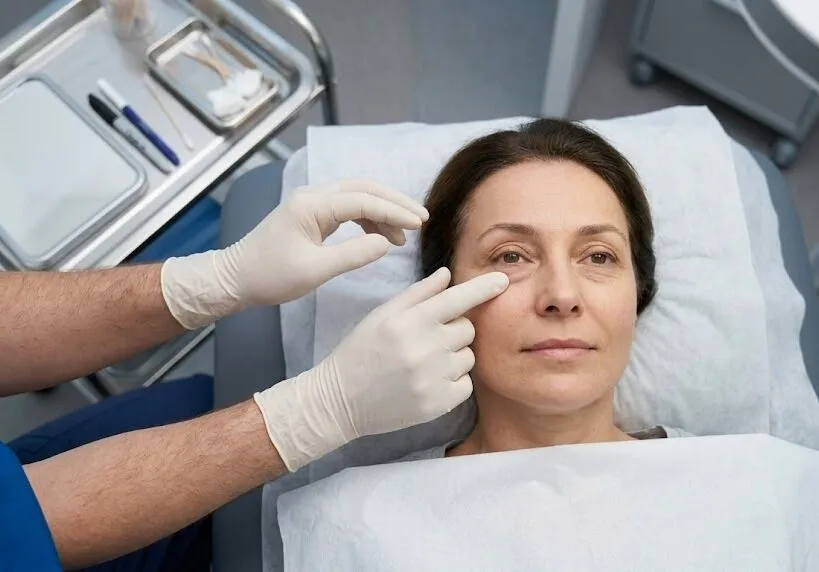
Puffy lower lids and dark hollows can make you look worn out faster than almost anything, even after a full night’s rest. Once creams, chilled spoons and concealer no longer make a difference, it’s natural to start wondering about under eye surgery.
It’s a reasonable question, and it deserves a clear answer. Below, you’ll find what the procedure actually involves, who tends to be a good fit, how healing goes and where the dangers lie, so you arrive at your consultation prepared.
Key Takeaways
- Under eye surgery, known medically as lower blepharoplasty, takes out or repositions fat and can remove some excess skin.
- It’s performed on an outpatient basis and generally lasts from 30 minutes to two hours.
- Most patients resume their usual routines in one to two weeks, though complete healing takes a few months.
- The surgery addresses bags and sagging skin. By itself, it won’t get rid of dark circles, crow’s feet or fine wrinkles.
- The chief risks are dry eyes, scarring and problems with lid position, which is why choosing your surgeon counts for more than comparing prices.
- For milder concerns, fillers, lasers and peels may do the job.
What Is Under Eye Surgery?
Lower blepharoplasty is the usual medical name for the operation. The surgeon takes out, relocates or reshapes the fat under the eyes and, if necessary, removes surplus skin and muscle to even out the area. Certain clinics advertise it as under eye surgery, yet it’s the identical procedure.
People often confuse it with upper eyelid surgery. The two are different procedures, though plenty of patients have both during a single visit. The upper version corrects hooded or sagging lids, whereas the lower version goes after bags, creases and a constantly tired appearance.
Most lower lid surgery is done for cosmetic reasons. Upper eyelid surgery is sometimes medically necessary if loose skin obstructs your sight, and insurance coverage hinges on that distinction.
Why Under Eye Bags and Hollows Appear
With age, skin gradually loses its elasticity. The delicate membrane supporting the fat pads around your eyes also weakens, which lets the fat bulge outward and form under eye bags.
Heredity plays a large role. Some people develop bags in their twenties regardless of how well they sleep. Allergies, salt, fluid retention and certain thyroid conditions can also add puffiness.
Loss of volume is a further cause. When the cheeks flatten, a groove known as the tear trough grows deeper and throws shadows that look like dark circles. That’s why two people with under eye bags may need quite different treatments.
There are three main kinds of dark circles. Some stem from pigment in the skin, some from shadows created by bags or hollows, and some from blood vessels visible through thin skin. Surgery mostly helps the shadow kind, so it’s worth finding out which one you have.
Swelling that comes on suddenly or affects just one side should be checked by a doctor first, since it may have a medical cause unrelated to appearance.
Who Is a Good Candidate for Under Eye Surgery?
You may be a good candidate for eye bag surgery if you:
- Are generally healthy, without any medical conditions that are poorly controlled
- Are a non-smoker or willing to quit
- Have bags or sagging skin rather than only pigment or shadows
- Have reasonable expectations of the outcome
Most patients are 35 or over, although family genetics can make it necessary sooner. No strict age cutoff exists. A significant eye condition is the more usual obstacle.
Your surgeon should screen for dry eye and thyroid eye disease as well. They’ll also gauge how securely the lower lid stays in place, typically by pulling it gently down and observing how fast it returns. If it returns slowly, the lid is lax, which raises the odds of sagging after surgery and may call for added support.
Types of Lower Eyelid Procedures
No single technique fits everyone. Your surgeon picks one according to the cause of your concern.
- Transconjunctival approach. The incision is placed on the inside of the lower lid, leaving no visible scar. It works for fat bags when the skin is fairly firm, but it can’t tighten slack skin alone.
- Skin pinch or external approach. The cut follows the lash line just beneath it, allowing surplus skin or muscle to be trimmed. The scar typically blends in with the lashes.
- Fat repositioning. Instead of taking the fat out, the surgeon relocates it into the hollow underneath. You might hear the term ocular fat transposition. This evens the shift between bag and cheek and makes a sunken appearance less likely.
- Add-ons. Laser resurfacing can improve fine lines and skin texture. A canthopexy firms up the outer corner to hold the lid in place, and fat transfer refills hollow areas. Some patients also need ptosis repair if the upper lid hangs low.
How good the skin is matters just as much as how much there is. Crepey, wrinkled skin generally signals thin, weak skin rather than an excess. Removing it may leave the lid without enough skin and tug it downward, so numerous surgeons address texture with lasers or other skin treatments.
Ask which approach is right for your anatomy and the reasoning behind it. The choice of technique is very important in eye bag surgery, and a skilled surgeon will explain it in simple terms.
How to Prepare
A bit of preparation makes healing after under eye bag surgery far easier.
- Schedule an eye exam and a general health check ahead of eyelid surgery.
- Tell your surgeon about every medicine and supplement you use. A few, blood thinners among them, might have to be paused, but only do so on your surgeon’s instructions.
- Give up smoking as soon as possible, because it delays healing.
- Line up someone to drive you, and preferably someone to stay with you for the first night or two.
- Have cold packs, lubricating drops and dark sunglasses ready before surgery day.
What Happens on Surgery Day
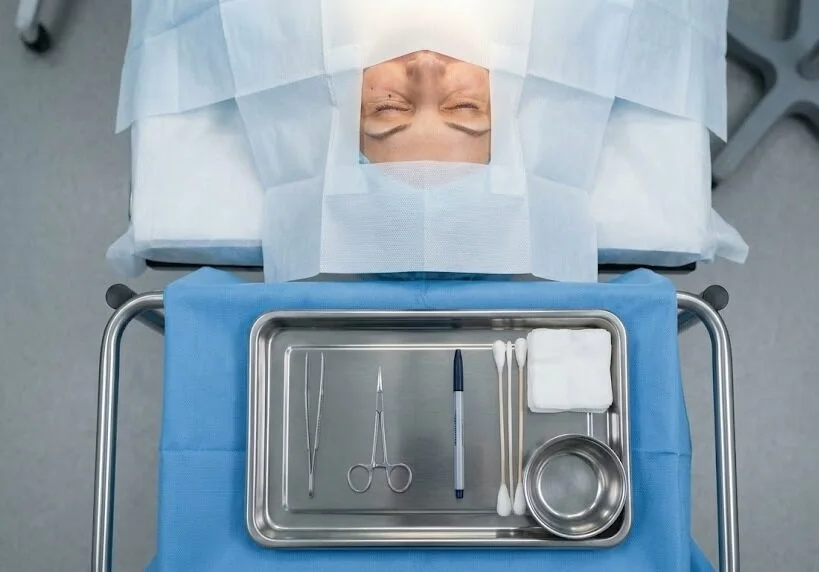
Local anesthesia combined with a sedative is what most surgeons use, keeping you comfortable. Being awake also allows them to verify that both eyes are symmetrical as they operate. Certain cases require general anesthesia, so find out which one is planned for you.
Small incisions are made, either on the inside of the lid or just under the lashes. The surgeon then removes or repositions fat and trims any surplus skin.
Surgery lasts anywhere between 30 minutes and two hours, and takes longer when the upper lids are done too. Afterward you’ll rest in a recovery area, then head home the same day. Stitches either dissolve or are taken out after roughly a week.
Recovery After Under Eye Surgery
- First 48 hours. Apply cold compresses, keep your head elevated while resting and don’t rub your eyes. Many surgeons advise ice packs for 10 minutes each hour during the first night.
- Days 3 to 7. Swelling and bruising are at their worst, then begin to fade. Blurry vision, watering eyes and sensitivity to light are common. Stitches generally come out near day 7.
- Weeks 1 to 2. Most people return to their usual routines. Hold off on contact lenses for roughly two weeks, and avoid vigorous exercise until your surgeon approves.
- Months 1 to 3. Dryness subsides, scars soften and the final result takes shape over a few months.
Dry eyes are the complaint heard most often. Lubricating drops or a plain ointment can relieve them. Put on sunglasses outside to protect the healing skin from wind and sun.
Nearly everyone has a few practical questions:
- Makeup. Usually fine to wear again after the first week or two, once your surgeon confirms the incisions have healed.
- Driving. Wait until your vision is clear, you’ve stopped sedating medication and your surgeon gives approval.
- Exercise. Avoid vigorous workouts for up to a few weeks, or until your surgeon clears you.
- Sun. Wear sunglasses, and apply sunscreen to healed scars to keep them from darkening.
Risks and Complications
Lower blepharoplasty, like any operation, has risks. The principal ones include:
- Bleeding and infection
- Dryness and irritation of the eyes
- Scarring or changes in skin color
- Differences between the two eyes in the result
- The lower lid drooping downward or outward (ectropion)
- Difficulty shutting the eyes completely (lagophthalmos)
- Cornea scratches or injury; the cornea is the transparent outer layer at the front of the eye
- Chemosis, which is swelling of the transparent membrane covering the white of the eye
- A hollow look when too much fat is taken out
- Double vision, should an eye muscle be hurt
- Short-term blurred vision and, in very rare cases, loss of sight
- Retrobulbar hemorrhage, bleeding behind the eye, which is uncommon but serious.
Because lower lid surgery is more technically demanding than upper lid surgery, complications are more likely. Malposition of the lower lid is widely viewed as the most common serious problem, and a published review estimates ectropion in about 1% of patients. Picking an experienced surgeon is your best protection.
Patients with darker skin tones may also see deeper pigmentation along an external incision. Mention this during your consultation so your surgeon can take it into account.
Get in touch with your surgical team if you see bleeding, pus, heavy swelling, strong pain or any change in vision. A sudden loss of sight, intense pain, or an eye that feels tight and bulges may mean bleeding behind the eye. This is an emergency, so seek help right away.
If You’re Unhappy With the Result
Initial swelling and bruising make it difficult to assess the outcome, so wait several months before concluding that something has gone wrong.
When an issue lingers, for example uneven lids, a hollow appearance or a lid sitting too low, revision surgery may be possible. These situations are delicate. Seek a surgeon with particular experience in revision eyelid surgery, and ask your first surgeon about their touch-up policy before you commit.
Non-Surgical Alternatives to Try First
Not every situation calls for surgery. Gentler treatments often work for mild puffiness and are worth trying before you consider under eye bag surgery.
In the clinic:
- Hyaluronic acid fillers ease tear trough hollows. They usually last about a year and require a highly experienced injector.
- Laser resurfacing and peels smooth crepey texture and fine lines.
- Platelet-rich plasma (PRP) boosts skin thickness and texture.
- Botox relaxes the muscle behind the lines that form when you smile or squint.
- Fat transfer brings back natural fullness where the cheek has lost volume.
At home, these habits may reduce puffiness:
- Rest a cold compress over your eyes for a few minutes.
- Sleep enough, and raise your head a little at night.
- Reduce salt and late-evening fluids, and manage any allergies.
- A caffeine eye cream or a cool tea bag gives a quick but brief boost.
Over time, microneedling, retinoids and daily sunscreen also enhance skin quality.
No home or clinic option can eliminate true fat bags. In that case, surgical eye bag removal remains the better choice.
Cost and Insurance for Eye Bag Removal
Costs vary greatly depending on the surgeon, clinic, city and extras such as laser or fat transfer. The American Society of Plastic Surgeons reports an average surgeon’s fee of $3,876 for lower lid surgery.
That amount only covers the surgeon. Anesthesia, the surgical facility, tests and prescriptions are extra, so your final bill will be higher. Request an itemized written quote.
Cosmetic eye bag removal is seldom covered by insurance, though exceptions exist. Upper lid surgery to remove skin overhanging the lashes may be covered, and bags large enough to interfere with vision or with wearing glasses are occasionally deemed medically necessary. Check with your insurer before booking.
How to Choose a Surgeon for Under Eye Surgery
- Confirm board certification in plastic surgery, facial plastic surgery or ophthalmology with oculoplastic training.
- Find out how many lower blepharoplasty procedures they do annually.
- Look at before-and-after photos of patients whose anatomy resembles yours.
- Ask what might go wrong and how they’d deal with it.
- Be cautious of anyone who guarantees a dramatic transformation.
Frequently Asked Questions
How long does recovery take after under eye surgery?
Most people are ready to resume normal routines within one to two weeks. Bruises typically fade in about two weeks, whereas mild swelling and the final outcome may take a few months.
Is under eye surgery painful?
Not while it’s happening, since you’re numbed and sedated. Afterward, most patients feel tightness, soreness and puffiness instead of sharp pain. Cold packs and the medication your surgeon suggests normally keep it under control. Severe pain isn’t normal, so contact your team if you feel it.
How long do under eye surgery results last?
The results frequently last for many years, as removed fat doesn’t return. Still, aging goes on and skin may loosen again later. Protecting your skin from the sun and avoiding smoking help the results last.
Can under eye surgery remove dark circles?
Not on its own. When shadows are caused by bulging fat or a deep tear trough, surgery can lessen them. Dark circles from pigment or visible blood vessels generally call for skin treatments such as lasers or topical products.
How much does under eye surgery cost?
The American Society of Plastic Surgeons gives an average surgeon’s fee of $3,876 for lower lid surgery, not including anesthesia and facility fees. With those included, the total is typically higher and differs by surgeon and location.
Can eye bags come back after surgery?
Removed fat doesn’t regrow. However, the remaining fat may bulge forward in time and skin can loosen with age, so new bags can form. For most people this takes many years, and sun protection and avoiding smoking slow it.
Is eye bag surgery worth it?
That depends on how much your bags bother you and what’s behind them. Patients with genuine fat bags are often pleased with the outcome, particularly with realistic expectations. If pigment or crepey skin is your main concern, surgery may be the wrong tool. A consultation will show where you stand.
Is eye bag surgery safe?
With an experienced surgeon it’s generally regarded as safe and effective, and most patients heal without serious trouble. But lower lid surgery is more technical than upper lid surgery, so it’s important to pick a board-certified surgeon who performs it frequently. Serious complications are uncommon, yet they do occur.
Bottom Line
Under eye surgery can smooth bags and leave tired eyes looking rested, but it works best when your expectations fit what it can achieve. It reshapes fat and skin; it won’t fix every dark circle or wrinkle, and healing requires patience.
Begin with a consultation with a board-certified surgeon, ask lots of questions and weigh surgical against non-surgical options. This guide is meant for information only and doesn’t replace personal medical advice.