
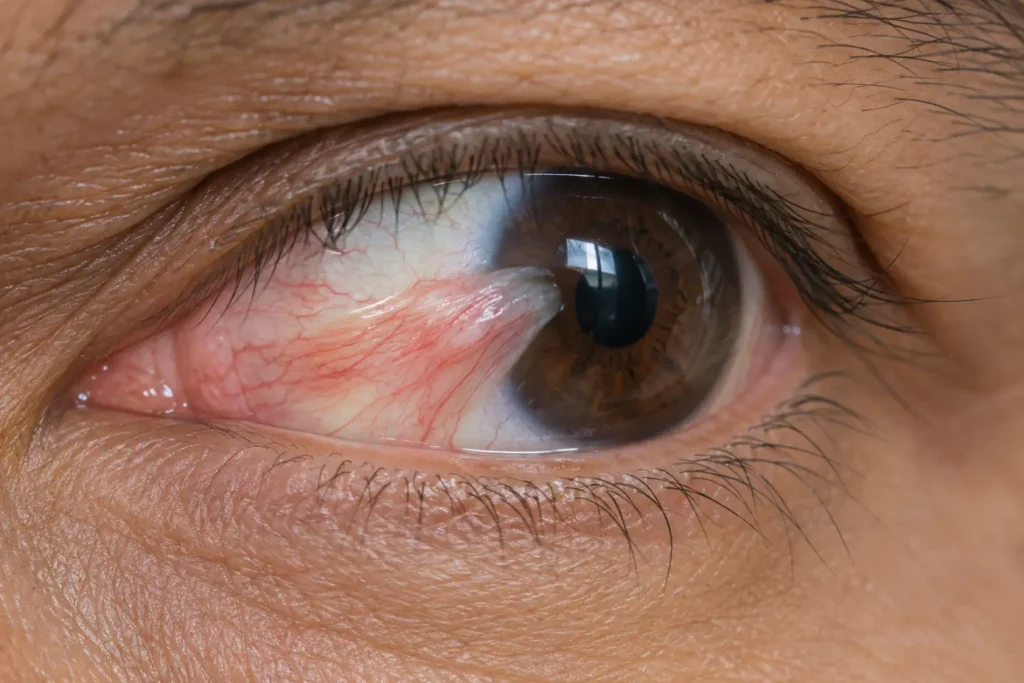
A pterygium is a visible, fleshy patch of tissue that grows on the surface of the eye. Pterygium often starts on the conjunctiva, the clear tissue that covers the white part of the eye. Over time, it may slowly grow toward the cornea. In some people, it stays small and does not cause much discomfort, while in others, it can become more noticeable and affect vision or make the eye feel irritated.
Key Takeaways
- Pterygium Eye Surgery removes abnormal tissue that may affect comfort or vision.
- Small, stable pterygia may only need regular monitoring and eye care.
- Redness, watering, and mild irritation are common during early recovery.
- UV protection can help reduce irritation and the risk of recurrence.
In others, it can become irritated, grow larger, or affect vision.
When a pterygium becomes uncomfortable or starts interfering with the cornea, an eye specialist may recommend pterygium eye surgery.
Why Does Pterygium Develop?
Frequent exposure to ultraviolet (UV) light is strongly associated with Pterygium Eye Surgery. Spending a lot of time outdoors without proper eye protection can increase your exposure to UV rays. Wind, dust, and dry weather can also irritate the eyes, especially when you are outside for long periods.
People who work outdoors or regularly spend hours in the sun may have a higher chance of developing a pterygium.
A pterygium may cause:
- Persistent eye redness
- Burning or irritation
- Dryness
- Watery eyes
- A feeling of having something in the eye
- A visible fleshy growth
A small pterygium does not always require surgery. If it is not growing or affecting vision, an ophthalmologist may simply keep an eye on it.
Also Read: IOL Eye Surgery: Types, Procedure and Recovery
When Should Pterygium Be Removed?
The appearance of a pterygium alone does not always mean that surgery is necessary. Doctors generally consider several factors before recommending removal.
Pterygium Eye Surgery may be appropriate when:
- Vision has become blurry or distorted
- The pterygium is causing significant astigmatism
- Redness and irritation keep returning
- Lubricating drops are not providing enough relief
- Contact lenses have become difficult to wear
- The growth is interfering with normal eye function
- The patient has a significant cosmetic concern
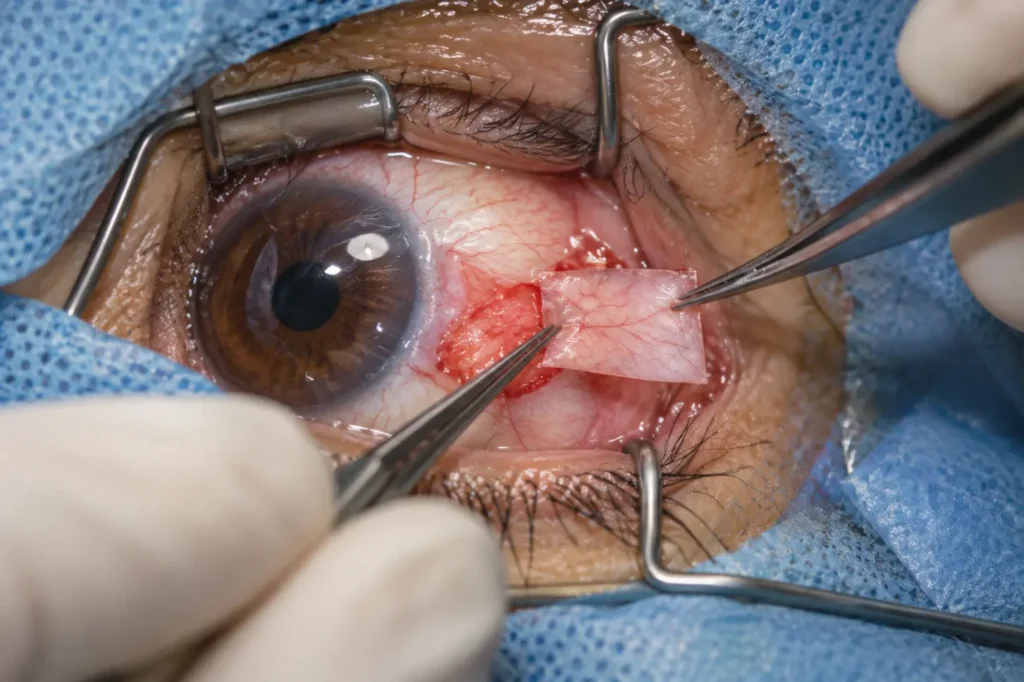
What Happens During Pterygium Eye Surgery?
Pterygium Eye Surgery is usually a day-care procedure, so you typically do not need to stay in the hospital overnight. Once the surgery is finished and your doctor is satisfied with your condition, you can usually return home the same day.
The procedure usually follows these steps:
- The eye is numbed: Local anesthesia keeps the eye comfortable during surgery.
- The pterygium is removed: The surgeon gently removes the abnormal tissue from the surface of the eye, taking care to protect the surrounding healthy tissue.
- The affected area is prepared: The surgical site is cleaned and prepared for the next step.
- Healthy tissue is placed over the area: A small piece of conjunctiva is usually taken from another part of the same eye and positioned over the area where the pterygium was removed.
- The graft is secured: The tissue may be held in place with very fine sutures or a surgical adhesive, depending on the surgeon’s technique.
The use of a conjunctival graft is intended to help the eye heal properly and lower the possibility of the pterygium returning.
What Is Recovery Like?
The eye may look quite red after surgery, and this can be concerning for some patients. Redness, watery eyes, mild swelling, and a gritty or scratchy feeling are quite common in the first few days after surgery. These symptoms usually improve as the eye heals.
Your doctor may prescribe antibiotic or anti-inflammatory eye drops, along with artificial tears to keep the eye comfortable. Make sure you use all the drops exactly as directed and do not stop them early unless your doctor advises you to.
During recovery, it is important to:
- Avoid rubbing the operated eye
- Keep the eye protected from dust and smoke
- Use prescribed medication correctly
- Avoid swimming until your doctor gives permission
- Follow activity restrictions provided by your surgeon
- Wear sunglasses outdoors
- Keep all follow-up appointments
Vision may be slightly blurred at first and can take some time to settle.
Pterygium Eye Surgery and Other Treatment Options
| Treatment | Best Suited For | What It Does |
| Observation | Small, stable growths | Allows the doctor to monitor changes |
| Artificial tears | Dryness and mild irritation | Keeps the eye surface comfortable |
| Anti-inflammatory drops | Active inflammation | Helps control inflammation when prescribed |
| UV protection | People at risk of continued exposure | Helps limit further UV exposure |
| Surgery | Vision problems, significant symptoms, or progressive growth | Removes the abnormal tissue |
Non-surgical treatments can control irritation, but they cannot physically remove an established pterygium.
Are There Risks With Pterygium Eye Surgery?
Most patients recover without major problems, but potential risks include:
- Infection
- Bleeding
- Prolonged redness
- Inflammation
- Graft displacement or other graft-related problems
- Scarring
- Temporary or persistent changes in vision
- Recurrence of the pterygium
The possibility of recurrence is one reason follow-up care and eye protection are important after surgery.
How Can You Protect Your Eyes?
Removing a pterygium does not necessarily prevent another one from developing. Protecting your eyes from prolonged UV exposure is therefore important.
When spending time outdoors, consider:
- Wearing sunglasses with UV protection
- Using a hat with a broad brim
- Avoiding unnecessary exposure to strong sunlight
- Using lubricating drops when recommended by your eye doctor
Frequently Asked Questions
1.Is pterygiumEye surgery always necessary?
No. A small pterygium that is not affecting vision or causing ongoing discomfort may only need regular monitoring. Surgery is usually considered when the growth becomes larger, causes persistent irritation, changes the shape of the cornea, affects vision, or becomes a significant cosmetic concern. An ophthalmologist can assess the growth and recommend the most suitable option.
2.Can I go outside after pterygium Eye surgery?
You can usually go outside when your eye specialist says it is appropriate, but you should protect the operated eye during the healing period. Sunglasses that provide UV protection and a broad-brimmed hat can help shield your eyes from sunlight. It is also a good idea to avoid dusty or smoky environments while the eye is recovering.
3.Does pterygium Eye surgery hurt?
The eye is generally numbed with local anesthesia during the procedure, so you should not feel significant pain while the surgery is being performed. Some discomfort, irritation, watering, or a scratchy sensation may occur afterward as the eye heals. Your doctor can recommend appropriate medication and eye drops to make the recovery period more comfortable.