
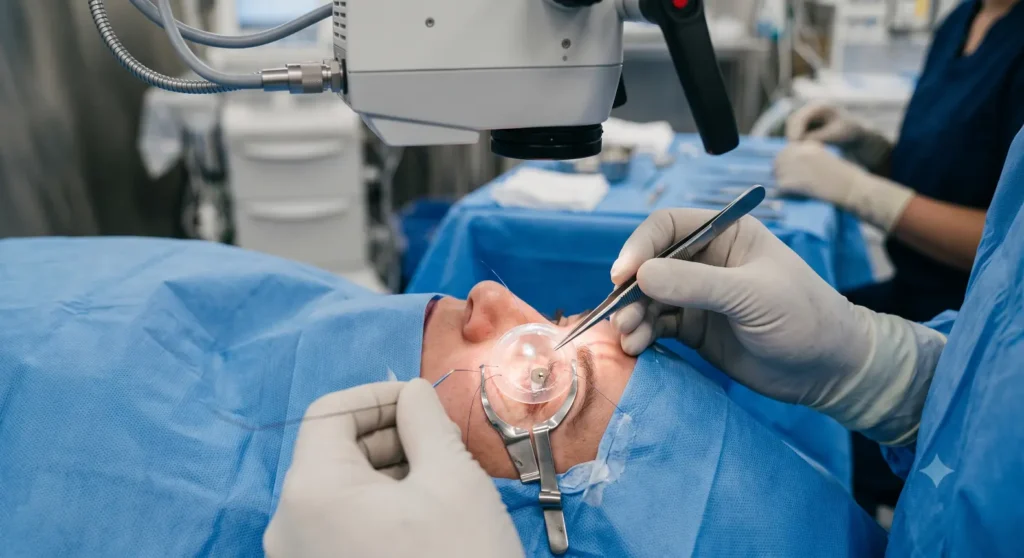
Clear vision depends heavily on the health and shape of the cornea, the transparent front surface of the eye.When the outer and middle portions of the cornea are damaged but the deepest layer is still healthy, DALK eye surgery can be an option.
Key Takeaways
- DALK replaces only damaged corneal layers.
- The healthy inner corneal layer is preserved.
- Surgery usually takes about one to two hours.
- In some cases, full-thickness transplant may be needed.
Conditions such as keratoconus, corneal scarring, and certain corneal diseases can change the cornea’s shape or clarity and affect vision. DALK, or Deep Anterior Lamellar Keratoplasty, is a type of partial corneal transplant. Instead of replacing the entire cornea, the surgeon removes the damaged front layers and replaces them with healthy donor tissue while keeping the patient’s own healthy inner corneal layer in place.
Also Read:IOL Eye Surgery: Types, Procedure and Recovery
What Is DALK Eye Surgery?
DALK Eye Surgery is a type of corneal transplant in which the diseased front and middle portions of the cornea are removed and replaced with donor corneal tissue.
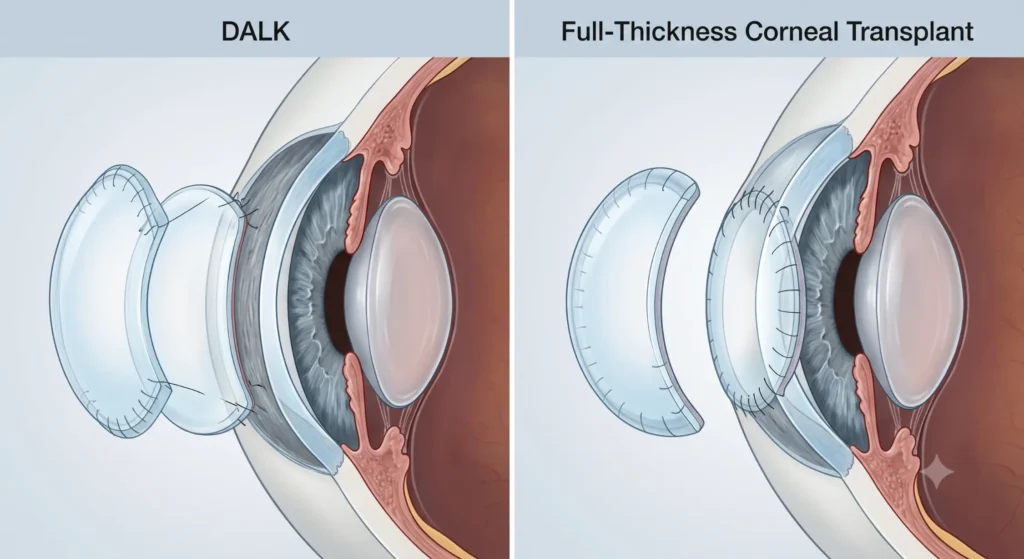
Unlike a full-thickness corneal transplant, known as penetrating keratoplasty or PK, DALK aims to preserve the patient’s own healthy endothelium, the innermost layer of the cornea. This can reduce the risk of some complications associated with full-thickness transplantation.
Conditions That May Require For DALK Eye Surgery
An eye specialist may consider DALK when the corneal endothelium is healthy but the other layers are significantly affected. Common reasons include:
- Keratoconus
- Certain corneal dystrophies
- Corneal scars
- Previous corneal infections that have healed but left significant scarring
- Some other conditions affecting the corneal stroma
DALK is not appropriate for every patient. The condition and depth of corneal damage need to be carefully assessed before surgery.
How Is DALK Eye Surgery Performed?
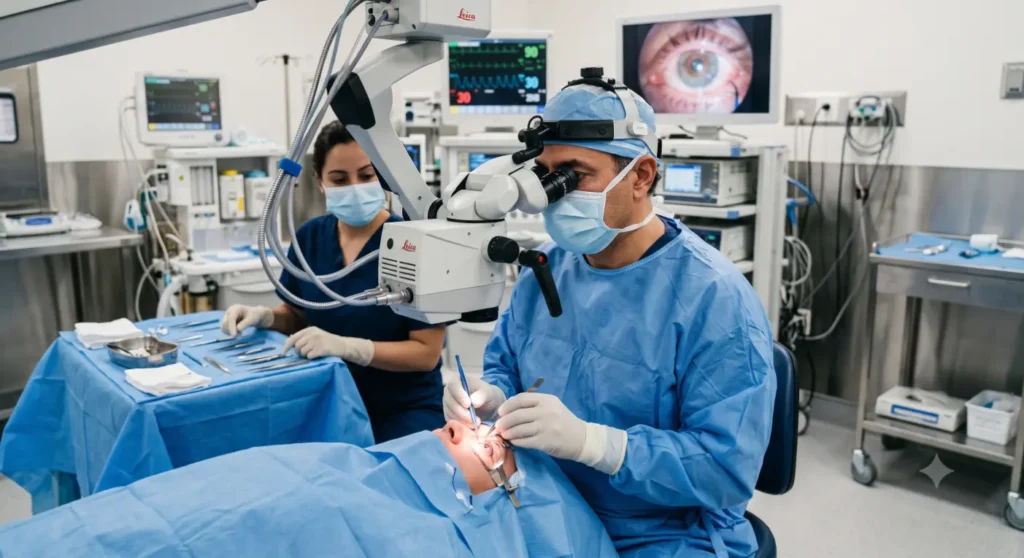
During DALK eye surgery, the surgeon removes the damaged layers of the cornea while carefully keeping the healthy inner layer intact. Once the affected tissue has been removed, a matching section of healthy donor corneal tissue is positioned over the remaining cornea and held securely with very fine sutures.
The surgery generally takes about one to two hours, although the exact time can vary depending on the patient’s condition and the technique used by the surgeon. In some cases, the surgeon may find that the deeper corneal layer cannot be safely preserved. If this happens, the procedure may be changed to a full-thickness corneal transplant to achieve the safest and most appropriate outcome.
DALK Eye Surgery vs Full-Thickness Corneal Transplant
| Feature | DALK | Full-thickness transplant |
| Type of transplant | Partial thickness | Entire cornea |
| Healthy endothelium | Preserved | Replaced |
| Common use | Keratoconus and selected corneal scars | Diseases affecting deeper corneal layers |
| Rejection risk | Generally lower | Generally higher |
| Recovery | Can take months to years | Can also be prolonged |
| Glasses or contact lenses | May still be required | May still be required |
DALK can offer advantages when the patient’s inner corneal layer is healthy, but the final choice depends on the condition of the eye and the surgeon’s assessment.
Benefits of DALK Eye Surgery
The main potential benefits include:
- Preserving the patient’s healthy endothelium
- Lower risk of endothelial graft rejection compared with a full-thickness transplant
- Reduced risk of some complications inside the eye
- Improved corneal clarity and shape
- Potential improvement in functional vision
However, DALK does not guarantee perfect eyesight. Some patients may continue to need glasses or contact lenses after surgery.
Recovery After DALK Eye Surgery
Recovery from DALK is gradual. Vision can remain blurry during the early healing period and may continue to change as the cornea settles and stitches are adjusted or removed.
Patients are usually prescribed eye drops and need regular follow-up appointments. Corneal stitches may remain for many months and sometimes longer, depending on healing and the surgeon’s approach.
During recovery, patients are generally advised to:
- Avoid rubbing or pressing on the eye
- Use prescribed eye drops exactly as directed
- Protect the eye from injury
- Avoid swimming until the doctor says it is safe
- Attend scheduled follow-up appointments
- Avoid strenuous activities for the period recommended by the surgeon
Possible Risks and Complications
Like any surgical procedure, DALK has potential risks. These may include infection, inflammation, graft rejection or failure, astigmatism, raised eye pressure, cataract, and the need for additional treatment. Occasionally, the procedure may need to be converted to a full-thickness transplant.
Patients should contact their eye specialist promptly if they develop increasing redness, pain, light sensitivity, or sudden worsening of vision, as these symptoms can require urgent assessment.
Also Read: Pterygium Eye Surgery: Before and After
Frequently Asked Questions
1. Is DALK eye surgery painful?
The surgery itself is performed under anesthesia, so significant pain is not expected during the procedure. Some discomfort, grittiness, watering, or irritation can occur during recovery.
2. How long does vision take to improve after DALK?
Vision improves gradually. The final result can take many months, and some patients may experience changes for a year or longer.
3. Can DALK cure keratoconus?
DALK can replace the structurally abnormal corneal tissue and improve corneal clarity and shape, but it is a transplant procedure rather than a cure for the underlying tendency toward corneal disease.
4. Will I need glasses after DALK?
Possibly. Glasses or contact lenses may still be needed because astigmatism or changes in the corneal shape can remain after surgery.
5. Is DALK better than a full corneal transplant?
Neither procedure is universally better. DALK may be preferable when the inner corneal layer is healthy, while a full-thickness transplant may be necessary when deeper layers are affected.
6. Who decides whether DALK is suitable?
A corneal specialist evaluates the cornea using an eye examination and appropriate imaging or tests before recommending the most suitable surgical option.