
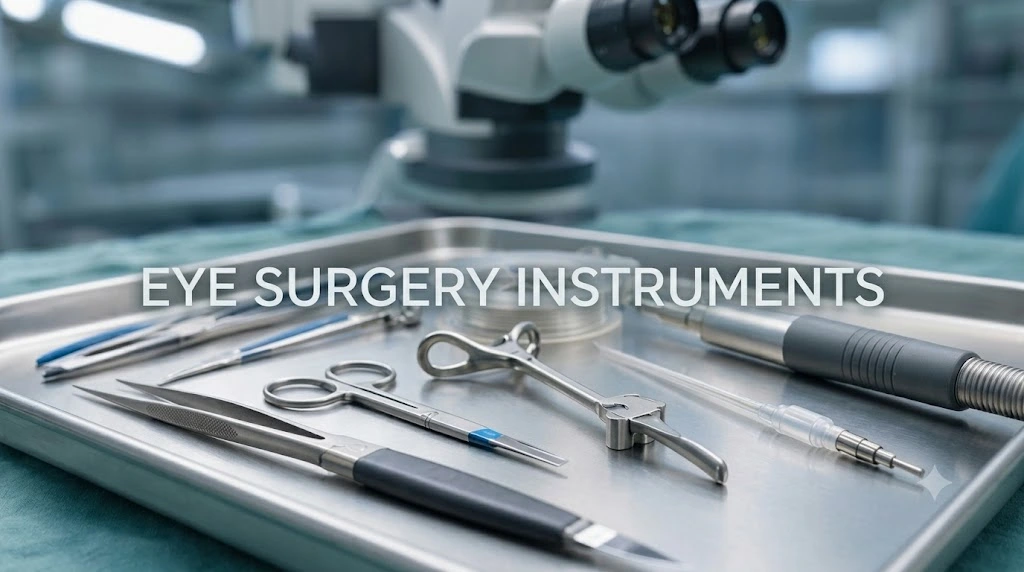
Eye surgery instruments, engineered with microscopic precision and fine-tuned delicacy, serve as the vital bridge between a surgeon’s skill and the preservation of human sight.
Having healthy vision is an integral part of our daily activities; therefore, it is crucial to take timely care of our eyes so that we have sound vision in the future. In case you want to improve your vision or get rid of eye disorders, you should be aware of the kind of surgeries performed on the eyes.
The process of eye surgery demands great precision since surgeons operate on sensitive parts like the cornea, lens, retina, and optic nerve. To increase precision during surgery, ophthalmologists use microsurgical equipment that is tailored to different surgeries. The guide aims at explaining common eye surgery instruments, what they do, and when they are utilized.
Table of Contents
Why Are Specialized Eye Surgery Instruments Important?
Eye tissues are very fragile. Any mistake may impact one’s ability to see, which is why precision tools are needed. Modern ophthalmic instruments will enable:
- Enhanced surgical accuracy
- Reduced tissue damage
- Smaller incisions
- Fewer complications
- Faster healing
- Greater patient comfort
Common Eye Surgery Instruments
The table below lists some of the most commonly used instruments in ophthalmic surgery.
| Instrument | Primary Function | Common Procedures |
| Operating Microscope | Magnifies eye structures | All eye surgeries |
| Eyelid Speculum | Holds eyelids open | Most eye surgeries |
| Micro Forceps | Holds delicate tissue | Cataract, retina, cornea |
| Micro Scissors | Cuts fine tissue | Retina, glaucoma, cornea |
| Keratome Blade | Creates corneal incision | Cataract surgery |
| Crescent Blade | Makes partial-thickness corneal cuts | Corneal surgery |
| Phacoemulsification Probe | Breaks and removes cataracts | Cataract surgery |
| Vitrectomy Cutter | Removes vitreous gel | Retinal surgery |
| Laser Platform | Reshapes the cornea | LASIK, SILK, SMILE |
| Irrigation & Aspiration Handpiece | Removes lens material | Cataract surgery |
Functions of Major Eye Surgery Instruments
In contemporary eye surgery, the process makes use of specialized equipment that is used to carry out the procedure efficiently. These special pieces of equipment assist in carrying out the process without any kind of harm to the tissue.
It depends on the surgery that will be carried out whether it will be cataract surgery, LASIK, glaucoma, or retinal surgery because different instruments are used for different types of surgeries.
| Instrument | Primary Function | Commonly Used In |
| Operating Microscope | Provides high magnification and bright illumination, allowing the surgeon to clearly view delicate eye structures during surgery. | All ophthalmic surgeries |
| Eyelid Speculum | Gently holds the eyelids open throughout the procedure, ensuring an unobstructed surgical field. | Most eye surgeries |
| Micro Forceps | Grasps, holds, and manipulates delicate eye tissues with precision during microsurgical procedures. | Cataract, retinal, and corneal surgeries |
| Micro Scissors | Makes fine and controlled cuts in delicate eye tissues with minimal trauma. | Retinal, glaucoma, and corneal surgeries |
| Keratome Blade | Creates small, self-sealing corneal incisions for instrument access during surgery. | Cataract and corneal surgeries |
| Phacoemulsification Probe | Uses ultrasonic energy to break the cloudy lens into tiny fragments before removing it. | Cataract surgery |
| Vitrectomy Cutter | Removes the vitreous gel and damaged tissue from the back of the eye during retinal procedures. | Retinal surgery |
| Laser System | Delivers precise laser energy to reshape the cornea or treat specific eye conditions without traditional blades. | LASIK, SILK, SMILE, glaucoma laser procedures |
| Irrigation and Aspiration Handpiece | Flushes balanced saline solution into the eye and removes lens fragments or surgical fluids. | Cataract surgery |
| Trephine | Creates a precise circular cut in the cornea for corneal transplant procedures. | Corneal transplant surgery |
Disposable vs Reusable Instruments
Both disposable and reusable instruments are used in ophthalmic surgery.
| Disposable Instruments | Reusable Instruments |
| Single-use | Used after sterilization |
| Lower infection risk | Cost-effective over time |
| No reprocessing required | Environmentally sustainable |
| Frequently used for blades and cannulas | Common for forceps and scissors |
The choice depends on the procedure, infection control protocols, and hospital practices.
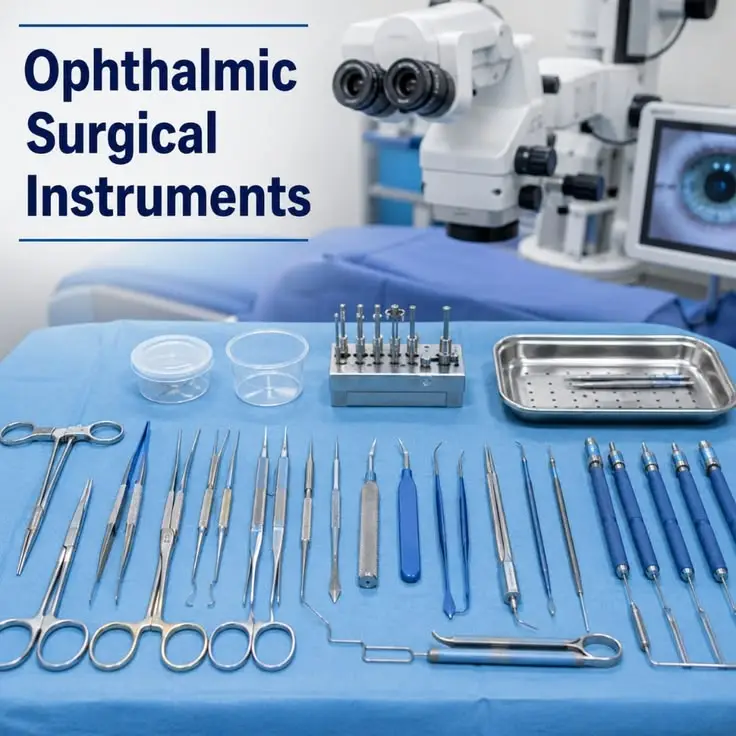
How Technology Has Improved Eye Surgery Instruments
Modern ophthalmology has introduced advanced technologies that improve surgical precision.
Recent innovations include
- Digital operating microscopes
- Femtosecond laser systems
- Three-dimensional visualization
- Image-guided surgery
- Micro-incision instruments
- Robotic-assisted ophthalmic technology (in selected research and specialized settings)
These technologies help surgeons perform procedures with greater accuracy while minimizing trauma to surrounding tissues.
How Are Eye Surgery Instruments Sterilized?
Sterilization procedures will minimize the chances of infection.
Some of the commonly used sterilization techniques are:
- Steam sterilization (Autoclaving)
- Low-temperature sterilization for temperature-sensitive instruments
- Chemical sterilization (where applicable)
- Disposable instruments for certain procedures
- Hospitals abide by their standard infection control practices.
Key Facts About Eye Surgery Instruments
| Fact | Details |
| Designed for microsurgery | Enables work on delicate eye structures |
| Highly specialized | Different procedures require different instruments |
| Often used with operating microscopes | Provides enhanced visualization |
| Many procedures use lasers | Improves precision and reduces recovery time |
| Strict sterilization is essential | Helps minimize infection risk |
The Bottom Line
Surgical equipment used on the eye is essential in performing successful eye operations. From the operating microscope to microsurgical forceps, from the phacoemulsification probes to the highly sophisticated laser technology, each piece of equipment serves a specific purpose in enhancing efficiency and precision in the operation.
The selection of the right eye surgery instruments, along with correct sterilization and surgical technique, makes ophthalmic surgery more accurate and allows for quicker recovery. Your eyesight needs only the best possible attention. Make an appointment with the qualified ophthalmologists at Revive Nursing Home now to move closer to achieving sharper vision and better eye health.
Frequently Asked Questions
1. Do the same tools get utilized in all eye surgeries?
Not necessarily. Different tools will be used based on the procedure performed. For instance, cataract surgery involves a phacoemulsification probe, and in case of retinal surgery, one needs a vitrectomy cutter.
2. What is the most important tool in eye surgery?
The most important tool does not exist since there are various crucial tools. Nonetheless, the operating microscope is very important in eye surgery since it is the tool that magnifies the vision in order to perform surgery.
3. Is the laser machine an eye surgery tool?
Yes, they are. Laser machines are very unique machines that are utilized in specific surgeries such as LASIK, SILK, SMILE, and glaucoma, among others.
4. Are eye surgery tools sterilized?
Yes. All surgical tools have to be sterilized before being utilized.
Also Read: Eye Surgery Types