
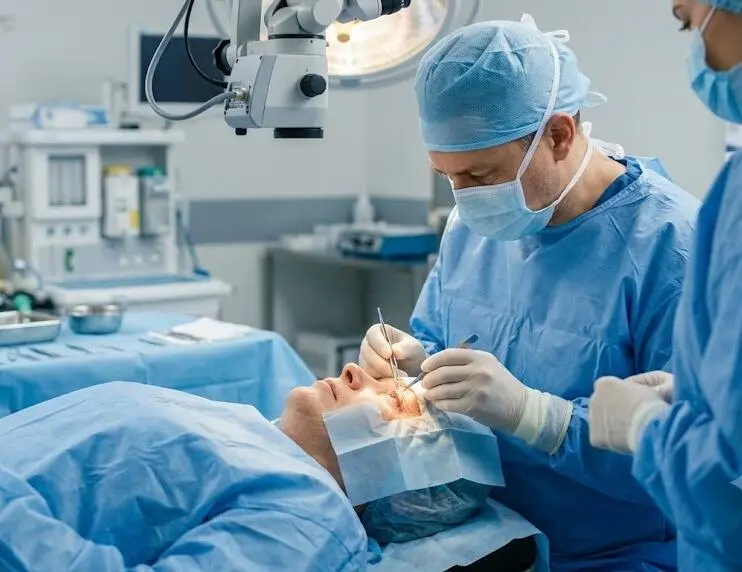
Cross eye surgery sounds scary mainly because it involves your eyes. In reality, it is one of the most common eye operations worldwide, and it helps children and adults get their eyes pointing the same way. You probably want straight answers about how it works, how recovery feels, and whether it is worth it. Cross eye surgery is also known as strabismus surgery, squint surgery, eye muscle surgery, or eye alignment surgery, and you will see these names used throughout this guide.
This guide covers all of that in plain language. Use it to prepare for a better talk with your own eye surgeon, not to replace one.
Key Takeaways
- Cross eye surgery adjusts the muscles that move your eye so both eyes line up. It does not change your glasses prescription.
- Surgery usually takes 30 minutes to two hours, and most people go home the same day.
- Redness and soreness can last a few weeks, and full healing takes two to three months.
- Serious problems are uncommon, but double vision, infection, or drifting eyes can happen.
- Early treatment matters most for children, yet adults can benefit too.
What Does Strabismus Surgery Fix?
Strabismus surgery is the medical name for what most people call cross eye surgery. It changes how the muscles around the eye pull, so both eyes can work as a team. Six muscles are attached to each eye, taking orders from the brain. When those signals or muscles fall out of balance, one eye can turn in, out, up, or down.
Doctors call these patterns esotropia (inward), exotropia (outward), hypertropia (upward), and hypotropia (downward). The turn may be constant or may appear only when you are tired.
The operation works on the muscles only. Your lens and cornea are left alone, which is why many surgeons call it eye muscle surgery. The goal is better alignment, not sharper focus.
Common causes include a family history of strabismus, uncorrected farsightedness, premature birth, and conditions such as cerebral palsy or Down syndrome. In adults, thyroid eye disease, diabetes, stroke, and head injury are frequent triggers. Besides a visible eye turn, watch for double vision, eye strain, headaches, tilting the head, squinting in bright light, and poor depth perception.
Who Needs Cross Eye Surgery?
Not every misaligned eye needs an operation. Glasses can straighten some inward turns caused by farsightedness, and prism lenses or vision therapy help others. Surgery enters the picture when those options are not enough.
In children, a wandering eye is not something to wait out. Eye-care groups advise an exam for any child older than four months whose eyes are not always straight. Left alone, the brain may start ignoring the turned eye, causing a lazy eye (amblyopia). Some babies only look cross-eyed because of a wide nose bridge, called pseudostrabismus.
Timing depends on the type of strabismus. Some forms that appear in infancy are often treated surgically in the first few years of life, because early alignment gives the brain a better chance to develop teamwork between the eyes (binocular vision). Your pediatric eye doctor will decide the right moment for your child.
Adults can need treatment too, often after a stroke, head injury, or nerve problem, or because childhood strabismus was never corrected. The payoff may include less double vision and more confidence.
Long-standing strabismus can also affect social comfort, eye contact, and even job or school confidence, which is why many adults choose surgery for functional and emotional reasons, not only cosmetic ones. Age is rarely a barrier; the question is whether the eyes can work together afterward.
How Is Strabismus Diagnosed?
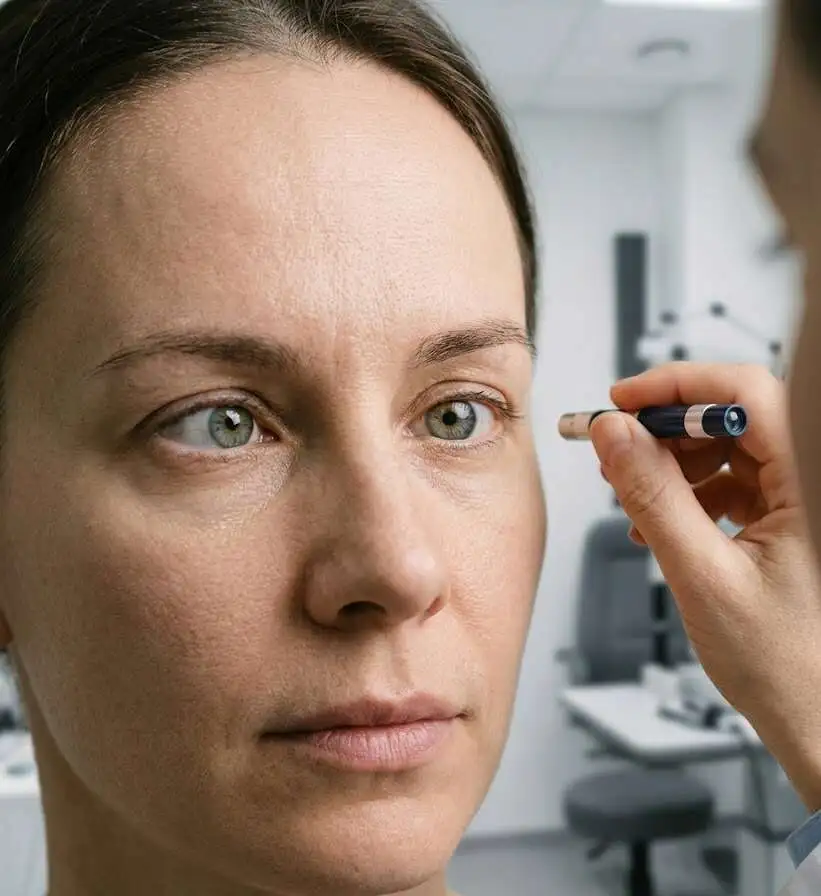
Diagnosis starts with a full eye exam, usually by an ophthalmologist or a pediatric eye specialist. Expect a vision test for each eye, a glasses check (often with dilating drops), and a look at how well the eyes move in every direction. The cover test, where each eye is covered in turn, shows how far the eyes drift, and prisms are used to measure the angle precisely. Doctors also check depth perception and look for any underlying cause, such as a nerve or thyroid problem. These measurements guide the surgical plan.
How Does Squint Surgery Work?
Picture the guy ropes on a tent. Move an anchor point, and the pull on the pole changes. Squint surgery follows the same logic: the surgeon changes where or how firmly a muscle attaches to the eye. Three techniques are common:
- Recession: the muscle is detached and reattached farther back, which loosens its pull.
- Resection: a small piece of muscle is removed and the rest reattached, which tightens its pull.
- Plication: the muscle is folded over on itself instead of cut, which also tightens it.
The surgeon reaches the muscles through a small opening in the clear tissue covering the white of the eye. There is no cut in the skin, and the eyeball stays in its socket. One muscle or several may be adjusted, in one eye or both. Sometimes the surgeon even operates on the straight-looking eye, because the plan depends on muscle balance.
Some adults can have adjustable sutures, a temporary knot that lets the surgeon fine-tune alignment afterward while the eye is numb.
Preparing for the Day of Surgery
Your surgical team will ask about earlier eye operations, your medications (especially blood thinners), and any bad reaction to anesthesia. Expect a dilated eye exam and fasting instructions, and arrange a ride home.
If your child is the patient, explain the day in simple, calm words, bring a favorite toy or blanket, and follow the fasting rules exactly, since anesthesia depends on an empty stomach. Adults should plan time off work and arrange help at home for the first few days.
Children usually have general anesthesia, while adults may have general anesthesia or light sedation with numbing. The operation typically lasts 30 minutes to two hours. The surgeon closes with dissolvable stitches, adds antibiotic drops, and you go home the same day.
Recovery After Cross Eye Surgery
Most people rest for a few days to two weeks. Redness is normal and can take several weeks, occasionally months, to fade. Eyes often feel scratchy and sore, though this usually eases within days. Double vision may appear briefly as the brain adjusts, and the stitches dissolve on their own within about six weeks.
A rough timeline helps. During the first day or two, expect blurry vision, watery eyes, and mild pain that usually responds to the pain relief your surgeon recommends. Pink or blood-tinged tears are common early on. Many children return to school within a week, while adults with desk jobs often go back within one to two weeks. Contact sports and swimming usually wait until the surgeon approves, often after several weeks.
- Use drops or ointment exactly as prescribed.
- Avoid rubbing your eyes.
- Stay out of pools, saunas, and hot tubs for two weeks.
- Skip driving until your surgeon says it is safe.
- Keep every follow-up appointment.
Risks and Side Effects
Every operation carries some risk, and strabismus surgery is no exception. The main ones are infection, bleeding, scarring, temporary double vision, and a drooping eyelid. The eyes can also drift again, or end up overcorrected or undercorrected. Sight-threatening complications are very rare.
Nausea or vomiting after anesthesia is fairly common, especially in children, and usually passes within hours. Rare complications include a slipped or lost muscle, a small puncture of the eye wall during surgery, and general anesthesia reactions. These are the reasons to choose an experienced surgical team and to report any unusual symptoms early.
Call your surgical team promptly if you notice worsening pain, falling vision, fever, discharge, spreading redness, eyelid swelling, or an eye turning sharply the opposite way.
How Successful Is Cross Eye Surgery?
Results are generally good, but never guaranteed. Many people end up with well-aligned eyes, yet some need a second procedure, especially when the turn was large or complex. Ask your surgeon for realistic expectations for your case.
Success is judged by more than looks. Surgeons consider straighter eyes, reduced double vision, a more natural head position, and, where possible, better teamwork between the eyes. Outcomes depend on the type of strabismus, its size, how long it has been present, and whether amblyopia is present. In some adults who have never had good depth perception, surgery may improve alignment without fully restoring it.
Surgery will not replace your glasses. If you needed lenses before, you will probably still need them, though prism lenses are usually no longer necessary. Children with a lazy eye may also need patching.
Cost and Non-Surgical Options
The price of squint surgery depends on your country, hospital, surgeon, and how many muscles are involved. Insurers often cover it when it is medically necessary, but may treat cosmetic cases differently. Ask for a written estimate and check pre-authorization rules first.
Depending on the cause, your doctor may first suggest glasses, prisms, vision therapy, or, in selected cases, botulinum toxin injections that temporarily weaken a muscle. If alignment does not hold, eye muscle surgery becomes the next conversation.
For children with amblyopia, patching one eye or using atropine drops in the stronger eye is often started before or alongside surgery to strengthen the weaker eye. Eye exercises can help certain problems, such as convergence insufficiency, but they cannot reliably straighten a large, constant turn.
Choosing the Right Surgeon
Look for a board-certified ophthalmologist who treats strabismus regularly. For children, a pediatric ophthalmologist is the usual choice, and for complex adult cases, a surgeon with specific strabismus training. Ask how many of these operations they perform each year, whether they offer adjustable sutures when suitable, and where the procedure will take place. A second opinion is reasonable for a major operation.
Questions to Ask Your Surgeon
- Which muscles will you operate on, and why?
- How likely is a second operation, and what is my risk of double vision?
- When can we return to school, work, driving, and sports?
- What type of anesthesia will be used, and what are its risks for me or my child?
- Are adjustable sutures an option, and will I need glasses, prisms, or patching afterward?
- What happens if the eyes end up overcorrected or drift back?
Frequently Asked Questions
Is cross eye surgery safe?
It is generally considered safe in the hands of an experienced strabismus surgeon, and it is routine in children and adults. It is still surgery, so infection, bleeding, and double vision are possible.
How long does it take to recover from cross eye surgery?
Recovery from eye muscle surgery is usually smooth. Most people return to light activity within a few days to two weeks, though full healing takes two to three months.
Can adults have cross eye surgery?
Yes. Adults have it for double vision, misalignment after a stroke or injury, or confidence. The surgeon will first check whether straightening the eyes could cause double vision, sometimes with a prism trial.
Is cross eye surgery permanent?
Often, but not always. Eyes can drift again, and some people need another operation. You will likely still wear glasses if you needed them before.
How much does cross eye surgery cost?
There is no single price. It varies by location, hospital, surgeon, and muscles treated, so ask for an itemized estimate before booking.
Is cross eye surgery painful?
The operation itself is done under anesthesia, so you feel nothing. Afterward, most people describe a scratchy, sore feeling for a few days that is manageable with the pain relief your surgeon suggests.
Is cross eye surgery only cosmetic?
No. Straightening the eyes can reduce double vision, eye strain, and head tilting, and may improve depth perception. Many people also feel more confident, but the medical benefits are often the main reason for surgery.
What is the best age for cross eye surgery?
There is no single best age. Children are often treated early to protect vision development, while adults can have surgery at any age if their eyes are healthy enough. The right timing depends on the type of misalignment and your doctor’s advice.
Can the eyes become crossed again after surgery?
Yes, it can happen, particularly if the original turn was large or the cause is still active. Regular follow-up visits catch drifting early, and a second procedure or other treatment may be suggested.
Bottom Line
Cross eye surgery is a well-established, usually same-day way to bring misaligned eyes back into balance. It will not cure every vision problem, and a second procedure is sometimes needed. Still, for many children and adults, it improves alignment, comfort, and confidence.
If you suspect strabismus, book an eye exam first, bring the questions above, and choose an experienced surgeon. The earlier the problem is checked, especially in children, the more options you will have.