
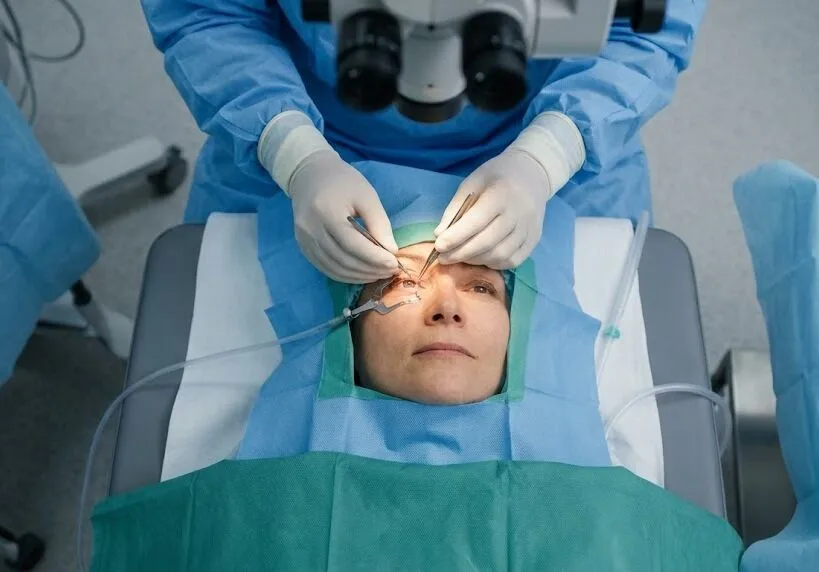
Dry eye surgery sounds like a big step for a problem that mostly feels like grit, burning and tired eyes. For most people it isn’t needed at all, because drops, warm compresses and a few habit changes keep symptoms in check.
But some people do everything right and still wake up with sore, blurry eyes. If that sounds familiar, the procedures below may be worth discussing with your eye doctor. This guide covers each option, who it suits and what to expect afterwards.
Key Takeaways
- Dry eye surgery is usually a later step, after drops, compresses and lid care have fallen short.
- Most options are minor clinic procedures, so many people are back to normal life the same day.
- The best choice depends on the cause: fast tear drainage, blocked oil glands or a damaged eye surface.
- Chronic dry eye is a long-term condition, so results often need maintenance or repeat sessions.
- Major operations are rare and kept for severe disease.
- Testing comes first, because the right procedure depends on the right diagnosis.
When Does Dry Eye Surgery Make Sense?
Dry eye treatment usually begins with the basics: artificial tears, a thicker ointment at night, warm compresses, gentle lid cleaning, and less smoke, dry air and screen time. Prescription drops or scleral lenses often come next.
Procedures enter the picture when those steps haven’t given enough relief. Typical signs are constant burning, vision that keeps fluctuating, and visible damage on the eye’s surface in chronic dry eye.
The type of dry eye matters too. In aqueous deficient dry eye, the glands don’t make enough tears. In evaporative dry eye, tears vanish too quickly, often because the oil-producing meibomian glands are blocked. Many people have both. Each pattern points to a different kind of surgery for dry eye, which is why diagnosis comes first.
Contributors such as certain medicines, Sjögren’s syndrome and thyroid eye disease are worth ruling out too.
Why Untreated Dry Eye Deserves Attention
Dry eye is easy to shrug off, but ignoring it isn’t harmless. In severe cases, ongoing inflammation of the eye’s surface can lead to pain, scarring, ulcers, infection and vision problems.
These outcomes are uncommon, and most people never come close to them. Still, they’re the reason doctors take persistent symptoms seriously.
What to Try Before Dry Eye Surgery
If you haven’t worked through the stronger non-surgical options yet, ask about them first.
- Preservative-free artificial tears through the day, plus an ointment at night.
- Anti-inflammatory prescription drops such as cyclosporine or lifitegrast, sometimes with a short course of steroid drops in severe cases.
- Autologous serum tears, made from your own blood, for severe disease that hasn’t responded to other treatment.
- Scleral lenses, large contact lenses that hold a reservoir of fluid over the cornea.
- Warm compresses, lid cleaning, a humidifier and regular breaks from screens.
A note on supplements: omega-3 capsules are popular, but a large trial funded by the US National Eye Institute found them no better than placebo for dry eye. Check with your doctor before spending money on them.
Types of Dry Eye Procedures, Explained
Here are the main dry eye procedures, from the gentlest to the most involved.
Punctal plugs
Tears drain through tiny openings in the inner corner of each eyelid. A punctal plug is a small insert that blocks one of them, so tears stay on the eye for longer.
It takes minutes, rarely hurts and needs no recovery. Some plugs dissolve, while others last for months or years and can be removed if they irritate. Mild scratchiness or overly watery eyes are the usual complaints, and plugs can sometimes fall out.
Dissolving plugs are often used as a trial run. If your eyes feel better while one lasts, a longer-lasting plug or cautery becomes an easier decision.
Punctal cautery
If plugs keep slipping out, a doctor may seal the opening with a little heat instead. It’s done in the clinic with a local anaesthetic and takes a few minutes.
It lasts longer than a plug, though a sealed opening can slowly reopen. In one 2021 study of 80 people, just over half reported better symptoms.
Intense pulsed light (IPL)
IPL uses gentle flashes of light around the eyes to calm inflammation in the eyelids and help blocked oil glands work better. It suits evaporative dry eye caused by gland dysfunction.
Most people need a short series of sessions, then top-ups, because the benefit fades after several months. Redness and mild swelling can happen. IPL isn’t always suitable for darker skin tones, so ask about your skin type and avoid the sun afterwards.
Thermal pulsation
This treatment warms the inner eyelids while applying gentle pressure to push out thickened oil that is clogging the glands. A session takes roughly 12 to 15 minutes in the clinic.
Many people notice steadier vision and less irritation within weeks. The benefit can last from several months to over a year before a repeat is needed.
Gland probing and eyelid exfoliation
Two other in-office options aim at blocked oil glands. Meibomian gland probing uses a tiny instrument to open clogged ducts, while eyelid exfoliation devices scrub debris from the lid margin.
The evidence is mixed. Early probing studies were encouraging, but later controlled trials haven’t consistently beaten comparison treatments. One sham-controlled trial of an exfoliation device found no clear benefit for blepharitis.
Amniotic membrane
When long-term dryness has damaged the cornea, healing becomes the priority. A thin layer of processed amniotic tissue, donated after a planned caesarean birth, is placed over the eye surface. It calms inflammation and supports repair, then dissolves on its own.
It can be applied in a clinic or an operating room, sometimes held in place by a ring or a bandage contact lens.
Eyelid surgery
Sometimes the problem is the eyelid rather than the tears. If the lids don’t close fully or sit out of position, the cornea is left exposed. Surgeons can correct the lid position or, in severe cases, join part of the upper and lower lids (tarsorrhaphy) to shrink the exposed area and cut tear evaporation.
It’s kept for conditions such as facial nerve paralysis or thyroid eye disease.
Salivary gland transplant
At the far end of the scale is minor salivary gland transplantation. A tiny gland from the inner lip is moved to the eye to supply constant lubrication. It’s done under general anaesthesia and used only in the most severe cases, such as Stevens-Johnson syndrome, when nothing else has worked.
Dry Eye Surgery Options Side by Side
| Option | Best for | Where it’s done | How long it lasts |
| Punctal plugs | Tears draining too fast | Clinic, a few minutes | Dissolving, or months to years |
| Punctal cautery | Plugs that keep falling out | Clinic, local anaesthetic | Longer lasting, may reopen |
| IPL | Inflamed lids, blocked oil glands | Clinic, short sessions | Months, with repeat visits |
| Thermal pulsation | Blocked oil glands | Clinic, about 12 to 15 minutes | Months to over a year |
| Amniotic membrane | Damaged eye surface | Clinic or operating room | Works as it heals and dissolves |
| Eyelid surgery | Exposed cornea | Usually an operating room | Long term, severe cases |
| Salivary gland transplant | Very severe tear loss | Operating room, general anaesthesia | Long term, rare |
How Doctors Choose the Right Option
No single test diagnoses dry eye, so doctors combine a few. A slit lamp exam inspects the eye surface and lids. A Schirmer test measures tear volume with a paper strip. Tear break-up time shows how fast tears evaporate. Dye staining reveals surface damage, and meibography images the oil glands.
Your history counts too: how long symptoms have lasted, what you’ve tried, your medicines and any autoimmune conditions. A good candidate for dry eye surgery has symptoms that persist despite proper care, plus results that point to a fixable cause. Together, these shape a dry eye treatment plan that fits you.
LASIK and cataract operations can trigger or worsen dryness, so mention any existing symptoms before booking either.
What to Expect After Dry Eye Surgery
Clinic-based dry eye procedures such as plugs, cautery, IPL and thermal pulsation mean little downtime. Most people go home the same day. Larger operations may call for days or weeks of modified activity, protective eyewear and prescribed drops or ointment.
Improvement is often gradual. Keep up lid hygiene, lubricants and follow-ups, because dry eye treatment works best as a long-term routine. There’s no cure at present, so the goal is steadier comfort and a healthier eye surface.
Risks and Side Effects of Dry Eye Surgery
Most dry eye procedures carry a low risk, but none is risk-free. Plugs can irritate or fall out. Cautery may cause excess watering. IPL can cause redness or swelling. Larger operations carry the usual surgical risks, including infection and scarring.
Call your eye doctor promptly if you notice increasing pain, worsening redness, discharge or any change in your vision after a procedure.
How Strong Is the Evidence for Dry Eye Surgery?
Not every option rests on the same level of proof. A Cochrane review of 18 trials found the evidence for punctal plugs inconclusive, even though many individual studies reported benefit.
Symptoms also fluctuate. In one large trial, more than half of the people taking a placebo reported clear improvement. None of this means procedures don’t help. It means your doctor should explain why they suggest a particular one, and what the evidence behind it looks like.

Finding the Right Eye Doctor
Both optometrists and ophthalmologists can diagnose and treat dry eye. If your case is severe or complicated, you may be referred to a cornea specialist.
Before the visit, write down when your symptoms started, what makes them better or worse, which drops you’ve tried, and every medicine and supplement you take. That list speeds up diagnosis and helps your doctor judge whether dry eye surgery is realistic for you.
Questions to Ask Before Dry Eye Surgery
- What type of dry eye do I have, and what is causing it?
- Which procedure matches that cause, and why?
- How many sessions will I need, and how long will results last?
- What are the risks in my case?
- What will it cost, and will my insurance help?
Frequently Asked Questions
What is the best surgery for dry eyes?
No single surgery for dry eye is best for everyone. Plugs or cautery suit people whose tears drain away too fast, while IPL or thermal pulsation targets blocked oil glands. Dry eye surgery is matched to the cause, so testing decides.
Is dry eye surgery painful?
Most procedures are comfortable. Numbing drops or a local anaesthetic are used where needed, and you may feel pressure, warmth or a brief sting. Mild scratchiness or watering is common afterwards. Bigger operations involve more discomfort, which your surgeon will manage.
Can dry eye surgery cure the problem permanently?
Not at present. Dry eye is a long-term condition, and procedures aim to reduce symptoms and protect the eye surface. Some effects last many months, but many people still need lubricants or repeat sessions.
How long is recovery after dry eye surgery?
For plugs, cautery, IPL and thermal pulsation, most people resume normal activities the same day. Larger operations such as amniotic membrane placement or eyelid surgery can take days to a few weeks. Your surgeon will give timelines for your procedure.
How much does dry eye surgery cost?
It depends on the procedure, the clinic and where you live. Plugs are usually the more affordable option and are more likely to be covered. Thermal pulsation is often not covered by insurance, and IPL coverage is inconsistent, so repeat sessions can add up. Ask for an itemised estimate and check your coverage first.
Bottom Line
Dry eye surgery isn’t a first move, but it can be a genuine turning point when drops and home care aren’t enough. The key is matching the procedure to the real cause, whether that’s fast tear drainage, clogged oil glands or a damaged eye surface.
Get proper testing, ask plenty of questions and expect ongoing care rather than a one-off fix. If chronic dry eye keeps disrupting your days, book a visit with an eye doctor and talk through your options.