
If you have glaucoma, you may already be familiar with regular eye drops, pressure checks, and frequent visits to your eye doctor. For many people, these treatments are enough to keep glaucoma under control. But sometimes, the pressure inside the eye stays too high even after treatment. In such cases, surgery may be considered to help protect the optic nerve and preserve the vision that remains.
Key Takeaways
- DCT helps lower eye pressure by improving fluid drainage from the eye.
- Deep sclerectomy is generally non-penetrating compared with trabeculectomy.
- Recovery varies, with redness, watering, discomfort, or blurred vision possible.
- Regular follow-up is important to monitor eye pressure and healing.
DCT eye surgery, which may refer to deep sclerectomy, is one surgical option used for glaucoma. The procedure is designed to help fluid drain from the eye more easily, which can lower the pressure inside the eye.
Also Read:Pterygium Eye Surgery: Before and After
What is DCT Eye Surgery?
DCT, or Deep Sclerectomy, is a surgical procedure for glaucoma. Its objective is to facilitate the drainage of fluid from inside the eye, thereby reducing intraocular pressure.
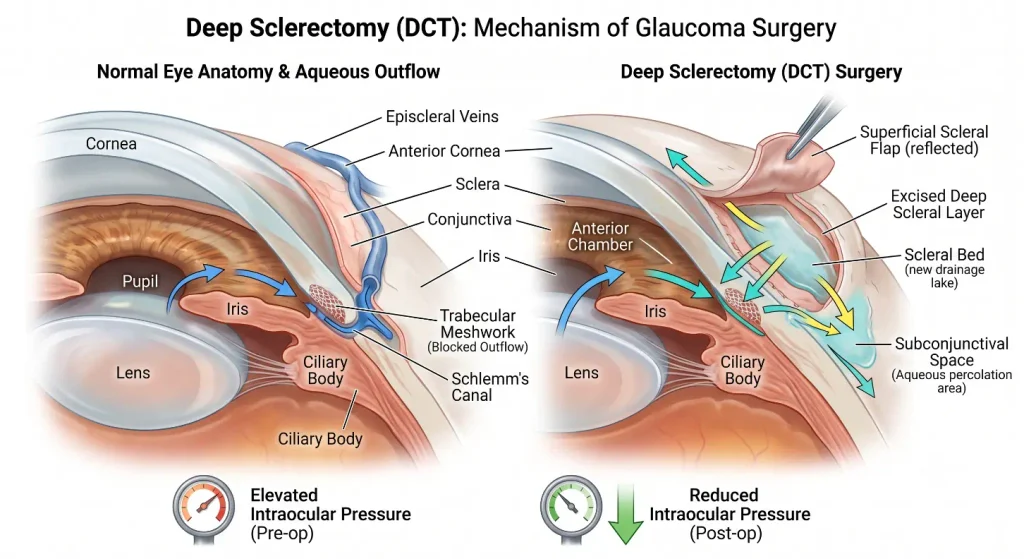
A clear fluid known as ‘humor‘ is produced inside the eye. After circulating within the eye, this fluid drains out along a specific pathway. If this drainage system fails to function correctly for any reason, fluid can accumulate inside the eye, leading to increased intraocular pressure.
Glaucoma often progresses gradually, and few symptoms appear in the early stages; therefore, keeping eye pressure under control is crucial.
In this procedure, instead of creating a large opening into the eye, a thin layer is removed from the white part of the eye, the ‘sclera’. This creates an easier pathway for fluid outflow and helps lower eye pressure.
When Might a Doctor Recommend DCT?
Surgery is usually not the first treatment for glaucoma. Doctors generally start with medicines, laser treatment, or a combination of both. DCT Eye Surgery may be discussed when these treatments are not keeping eye pressure at the desired level or when the glaucoma continues to worsen.
A doctor may consider surgery if:
- Eye pressure remains high despite regular treatment
- Tests show that the glaucoma is progressing
- Several eye drops are needed to control pressure
- Using eye drops every day is difficult
- Previous laser treatment has not worked well enough
Your doctor will not make this decision based on eye pressure alone. They will also consider your visual field tests, optic nerve health, type of glaucoma, previous treatment, and how quickly the disease is changing.
How Is DCT Eye Surgery Performed?
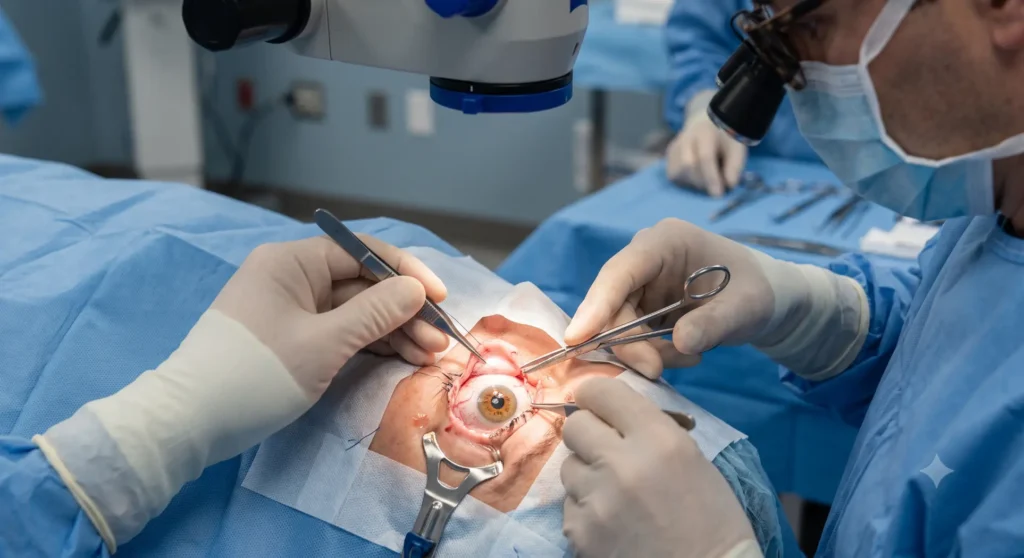
DCT is generally performed under local or regional anesthesia, so the eye is numb during the operation.
The surgeon makes a small incision in the outer part of the eye and carefully removes a thin layer of scleral tissue. The work is done close to the eye’s natural drainage structures.
The idea is to make it easier for aqueous humor to move out of the eye and, as a result, reduce pressure.
In some cases, the surgeon may use a small implant or another material to help keep the drainage area functioning properly.
The operation itself is usually relatively short, but the exact time depends on the patient’s condition and the surgical technique being used.
Also Read:Glaucoma Eye Surgery: Types,Treatment and Recovery
What Are the Benefits of DCT Eye Surgery?
For some patients, the procedure may also reduce the number of glaucoma medicines they need. However, this is not guaranteed.
Possible benefits include:
- Lower eye pressure
- Less dependence on glaucoma medicines for some patients
- Help in slowing further glaucoma damage
- A non-penetrating surgical approach
- An alternative to other glaucoma operations in suitable cases
DCT vs. Trabeculectomy
DCT and trabeculectomy are both used to treat glaucoma, but they are performed differently.
| Feature | DCT / Deep Sclerectomy | Trabeculectomy |
| Surgical approach | Non-penetrating | Penetrating |
| Main goal | Improve fluid drainage through the eye’s tissues | Create a new route for fluid to drain |
| Full-thickness opening | Usually not made | Made during surgery |
| Pressure reduction | Effective for selected patients | Often provides strong pressure reduction |
| Follow-up | Regular monitoring is needed | Regular monitoring is needed |
Your ophthalmologist will choose an approach based on the type of glaucoma you have, your target eye pressure, the condition of your optic nerve, and your response to previous treatment.
What Is Recovery Like After DCT Eye Surgery?
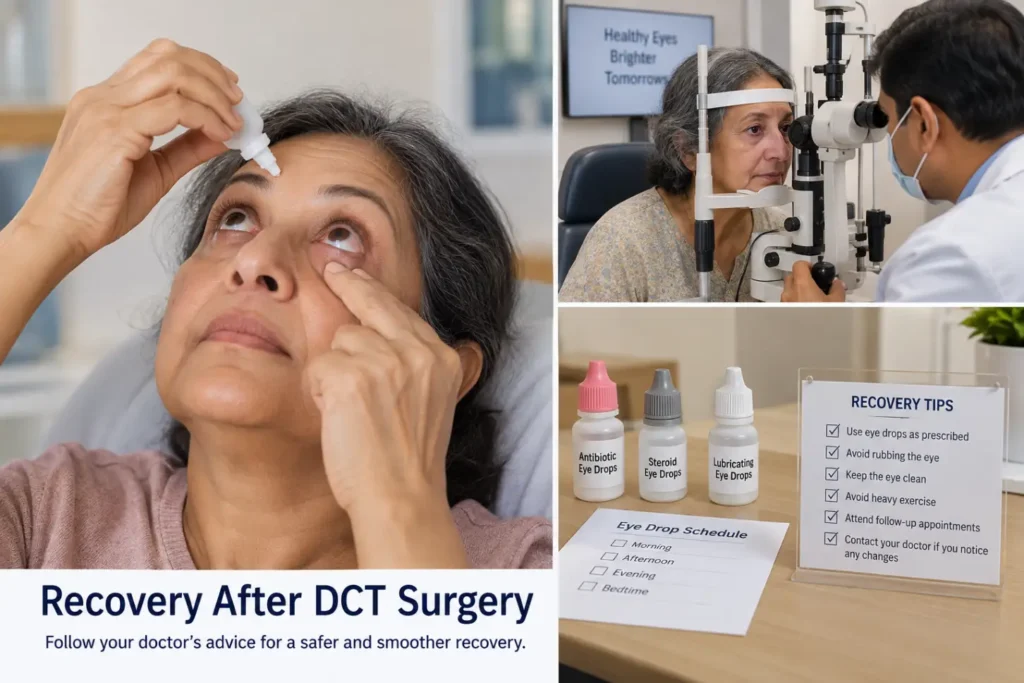
It is normal for the eye to look red or feel slightly uncomfortable after surgery. You may also notice watering or blurred vision for a while. These changes usually improve as the eye heals.
Your doctor may prescribe eye drops to reduce inflammation, prevent infection, or control eye pressure. Using them exactly as instructed is an important part of recovery.
For a smoother recovery:
- Do not rub or press on the operated eye
- Use your prescribed eye drops at the correct times
- Avoid heavy exercise until your doctor gives you permission
- Keep the eye away from dust and possible injury
- Attend all follow-up appointments
- Tell your doctor if your vision suddenly becomes worse
Healing is different for everyone. Some people recover quickly, while others need more time and closer monitoring.
What Are the Possible Risks?
Like any operation, DCT Eye Surgery has some possible risks.
Possible complications include:
- Inflammation
- Infection
- Bleeding
- Changes in eye pressure
- Blurred vision
- Scar tissue that affects drainage
- Eye pressure that does not fall enough
Before recommending DCT Eye Surgery, your ophthalmologist should explain why they think it is suitable for you and discuss the possible risks and benefits.
If you experience severe eye pain, sudden vision loss, significant swelling or redness, or any other unusual symptoms after surgery, contact your eye doctor without delay.
Frequently Asked Questions About DCT Eye Surgery
1. What is DCT eye surgery?
DCT, or deep sclerectomy, is a type of glaucoma surgery that helps improve the drainage of fluid from inside the eye.
2. Why might I need DCT surgery for glaucoma?
Your doctor may recommend DCT if your eye pressure remains too high despite using prescribed medicines or having laser treatment. It may also be considered if tests show that
3. What should I avoid after DCT surgery?
You should avoid rubbing or pressing on the operated eye and should follow your doctor’s instructions about exercise and other activities. It is also important to protect the eye from dust and accidental injury and to attend all scheduled follow-up appointments.
4. Are there any risks associated with DCT surgery?
Like any surgery, DCT can have potential complications. These may include inflammation, infection, bleeding, changes in eye pressure, blurred vision, scar tissue affecting drainage, or eye pressure that does not decrease enough.
5. How do I know if DCT is right for me?
The decision depends on several factors, including your type of glaucoma, eye pressure, optic nerve health, visual field results, previous treatments, and how your glaucoma is progressing. Your ophthalmologist can explain whether DCT is suitable for your particular condition and discuss its potential benefits and risks.