
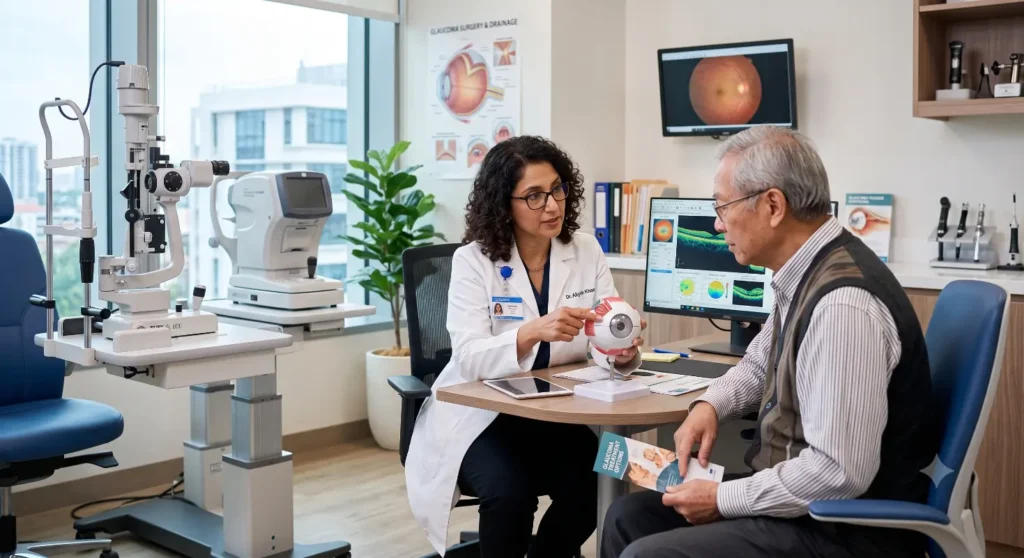
What Is Glaucoma Eye Surgery?
Glaucoma eye surgery may be recommended when eye pressure cannot be controlled adequately with eye drops, laser treatment, or other medicines. The main aim of surgery is to lower intraocular pressure and help prevent further vision loss.
When the eye’s natural fluid does not drain properly, pressure can build up inside the eye and put stress on the optic nerve. Glaucoma surgery may improve the drainage of this fluid or, in some cases, reduce the amount of fluid produced by the eye.
Key Takeaways
- Glaucoma surgery helps lower eye pressure and protect the optic nerve.
- Treatment options vary depending on the type and severity of glaucoma.
- Surgery cannot restore vision already lost from optic nerve damage.
- Proper aftercare and regular follow-up are important for recovery.
Surgery cannot restore vision that has already been lost due to glaucoma. However, it can help slow the progression of the disease and protect the vision that remains.
What Is Glaucoma?
Glaucoma is a serious eye condition that can gradually damage the optic nerve, which is essential for vision. In the early stages, it may not cause noticeable symptoms, and vision loss can develop so slowly that a person may not realize anything is wrong.
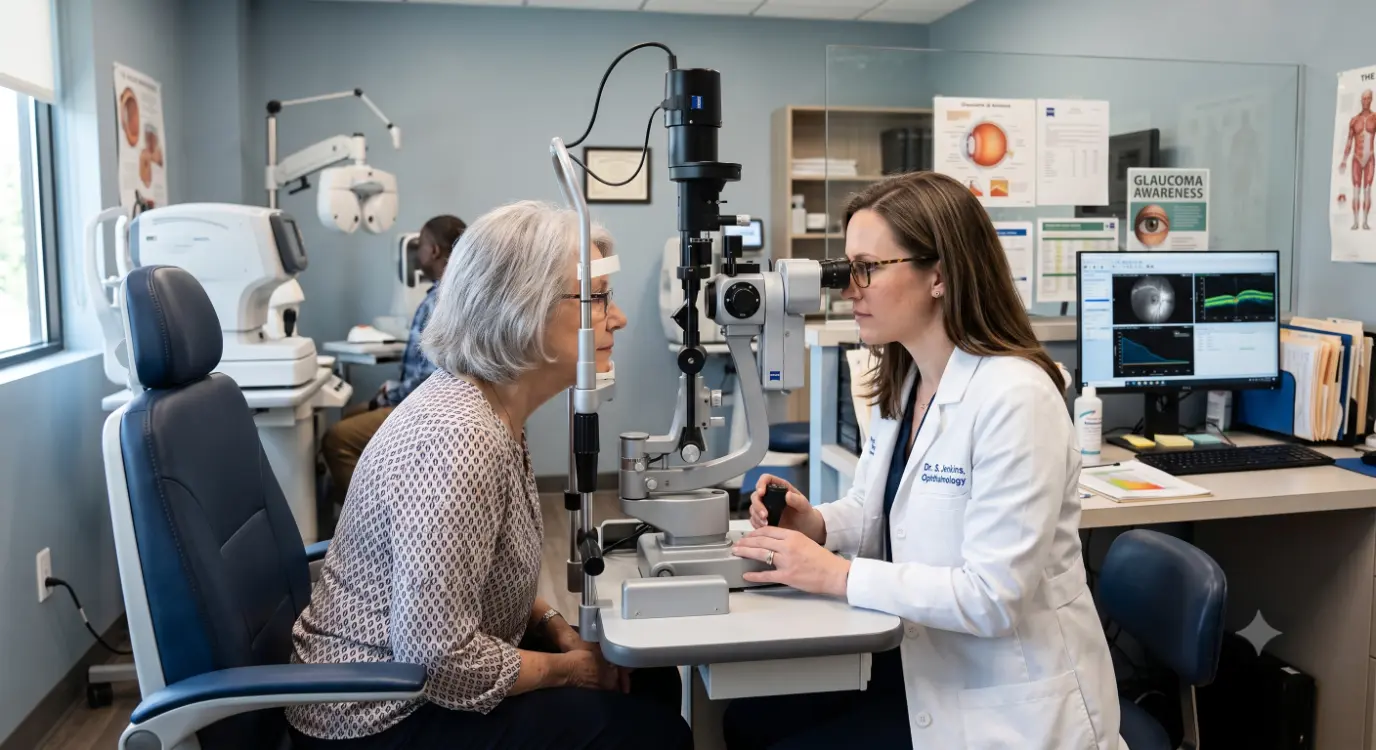
Regular eye examinations are important, especially for people who have a higher risk of developing glaucoma. Depending on the stage and severity of the disease, an ophthalmologist may recommend eye drops, laser treatment, or surgery to control eye pressure and protect the optic nerve.
Also Read:Robotic Eye Surgery: What You Need to Know
When Might Glaucoma Eye Surgery Be Needed?
Not everyone with glaucoma needs surgery. An ophthalmologist may consider surgery when:
· Eye pressure remains high despite eye drops or other treatments.
· Damage to the optic nerve continues to progress.
· Vision or the visual field gradually worsens.
· Laser treatment does not provide adequate pressure control.
· The doctor believes surgery is the best option to protect the patient’s remaining vision.
The most appropriate treatment depends on several factors, including the type and severity of glaucoma, eye pressure, optic nerve health, and the patient’s overall eye condition. An ophthalmologist will assess these factors and recommend the treatment that best suits the individual patient.
Different Types of Glaucoma Eye Surgery
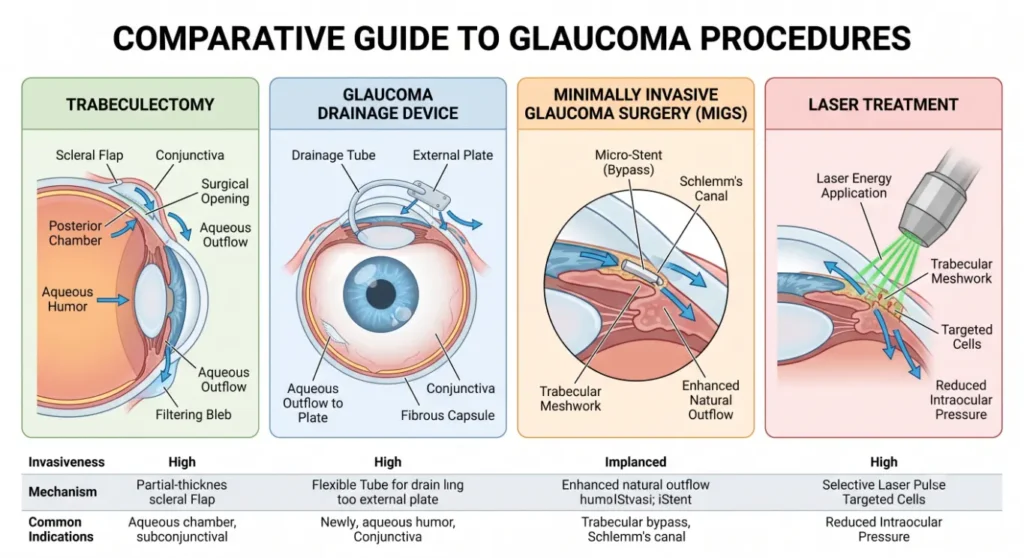
Glaucoma can affect people in different ways, so the same type of surgery may not be suitable for everyone. Eye specialists have several surgical options to choose from.
| Procedure | Basic Approach | When It May Be Used |
| Trabeculectomy | Makes a new drainage route for fluid | Often used when stronger pressure reduction is required |
| Glaucoma drainage device | Places a small tube and drainage plate in the eye | May be considered in complex or difficult cases |
| MIGS | Uses small surgical techniques or devices to improve fluid drainage | Commonly considered for selected mild to moderate cases |
| Laser treatment | Uses laser energy to change fluid drainage or production | Depends on the type of glaucoma |
There is no single procedure that is best for every patient. An eye specialist will recommend treatment based on the specific needs of the eye.
What Happens During Glaucoma Eye Surgery?
The exact steps involved in glaucoma Eye surgery depend on the procedure chosen by the ophthalmologist. Some glaucoma surgeries involve making an alternative opening to help the eye drain excess fluid. In other procedures, a small drainage device may be placed to assist with fluid movement. Certain treatments work by improving the eye’s natural drainage pathway. Many glaucoma surgeries are performed as day-care procedures, allowing the patient to return home after a period of observation. Before the operation, the doctor will explain the necessary preparations. These may include instructions about regular medicines, food and drink, and which eye drops should be used before or after the procedure.
Recovery After Glaucoma Eye Surgery
The recovery period is not the same for everyone and can vary according to the type of surgery performed. It is common to experience some redness, watering, mild discomfort, sensitivity to light, or temporary changes in vision during the initial healing period. To support proper healing, patients may be asked to:
* Avoid touching, rubbing, or putting pressure on the operated eye.
* Stay away from heavy lifting and demanding physical activities for the period advised by the doctor.
Use all prescribed medicines and eye drops exactly as directed.
Regular follow-up visits are essential after glaucoma surgery because the eye needs to be monitored closely during the healing period.
These visits allow the doctor to check eye pressure and make any necessary changes to the treatment.. Eye pressure can rise or fall while the eye heals, so the ophthalmologist may need to monitor the pressure closely and adjust treatment when required.
Can Glaucoma Eye Surgery Restore Lost Vision?
Glaucoma can permanently damage the optic nerve. Once vision has been lost because of this damage, it generally cannot be recovered through surgery. The purpose of glaucoma surgery is to lower pressure within the eye and help prevent further deterioration of the optic nerve. This is why finding glaucoma early is so important.
Also Read:PTK Eye Surgery
What Are the Possible Risks of Glaucoma Eye Surgery?
Although glaucoma surgery is commonly performed to protect vision, it can have potential complications, as with any surgical procedure. The risks depend on the specific operation and the patient’s eye health. Possible problems may include:
- Infection
- Inflammation
- Bleeding
- Changes in eye pressure
- Blurred or temporarily altered vision
- Persistent changes in vision in some cases
The possibility of needing additional treatment or another surgery Before proceeding, the ophthalmologist will discuss the expected benefits, possible complications, and recovery requirements.
Frequently Asked Questions
1. Is glaucoma surgery painful?
Glaucoma surgery is generally performed using anesthesia to keep the patient comfortable during the procedure. Some mild irritation, redness, watering, or discomfort may occur during the early recovery period. Your doctor may prescribe medicines or eye drops to help manage these symptoms.
2. Can glaucoma surgery restore vision that has already been lost?
Generally, no. Vision loss caused by permanent optic nerve damage from glaucoma cannot usually be restored through surgery. The main purpose of surgery is to lower eye pressure, slow further damage, and help preserve the vision that remains.
3. What should I avoid after glaucoma surgery?
After surgery, your doctor may advise you to avoid rubbing or pressing the treated eye, heavy lifting, and strenuous activities for a certain period.