
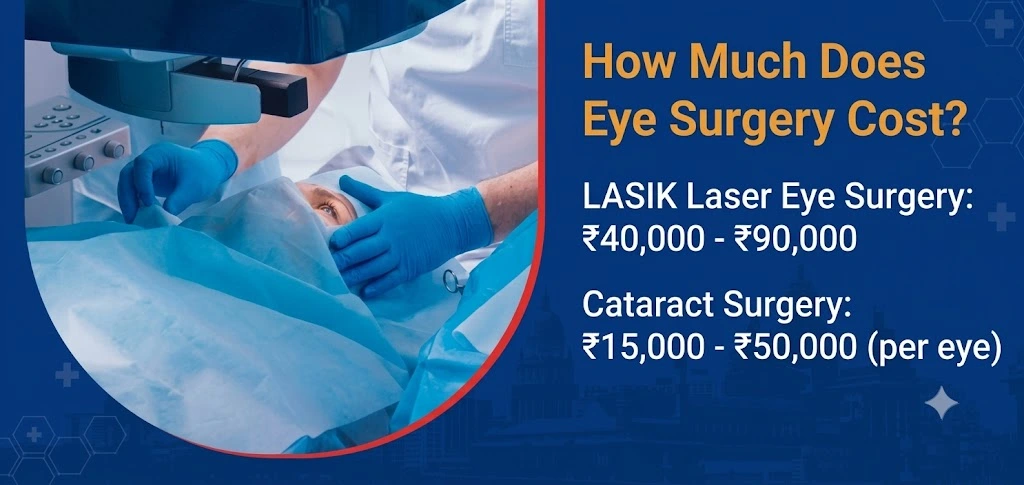
“How much does eye surgery cost?” The answer depends on the specific procedure, technology used, surgeon experience, and insurance coverage options available.
Vision plays a vital role in our everyday lives, and advances in ophthalmology have made it possible to treat many eye conditions through safe and effective surgical procedures.
There isn’t a single answer to how much does eye surgery cost because the final amount depends on the eye condition being treated, the surgical method, the technology used, the surgeon’s experience, and the healthcare facility where the procedure is performed.
Key Takeaways
- Eye surgery costs differ according to the procedure, technology, hospital, and surgeon.
- Cataract surgery is generally one of the most affordable eye operations, while retinal surgery tends to be the most expensive.
- Health insurance often covers medically necessary eye surgeries but may not include elective vision correction procedures.
Table of Contents
How Much Does Eye Surgery Cost in India?
The type of surgery is the biggest factor affecting the overall cost. Below are approximate price ranges for commonly performed eye procedures.
| Eye Surgery | Approximate Cost (India) |
| Cataract Surgery | ₹20,000 – ₹1,20,000 per eye |
| LASIK Vision Correction | ₹25,000 – ₹1,20,000 |
| Glaucoma Surgery | ₹30,000 – ₹1,50,000 |
| Retinal Surgery | ₹50,000 – ₹3,50,000+ |
| Corneal Transplant | ₹80,000 – ₹2,50,000 |
| Squint (Strabismus) Surgery | ₹25,000 – ₹80,000 |
These prices are indicative only. Actual costs may differ depending on the hospital, city, and individual treatment requirements.
Cataract Surgery Cost
Cataracts develop when the eye’s natural lens becomes cloudy, causing blurred or dim vision. The standard treatment involves removing the affected lens and replacing it with an artificial intraocular lens (IOL).
The overall cost largely depends on the type of IOL selected.
Approximate Price
- Standard cataract surgery: ₹20,000–₹40,000
- Foldable lens surgery: ₹40,000–₹70,000
- Premium multifocal or toric lens surgery: ₹70,000–₹1,20,000 or more
Premium lenses are designed to improve vision at multiple distances and may reduce the need for spectacles after surgery. Determining how much does eye surgery cost requires evaluating the specific procedure and required care.
LASIK Surgery Cost
LASIK is a laser-based procedure used to correct refractive errors such as myopia, hyperopia, and astigmatism. It is commonly chosen by people who want to reduce their dependence on glasses or contact lenses.
Typical Cost
- Conventional LASIK: ₹25,000–₹45,000
- Blade-free LASIK: ₹50,000–₹80,000
- SMILE or Contoura Vision: ₹80,000–₹1,20,000
Newer laser technologies often provide greater precision and faster recovery, which can increase the overall treatment cost.
Glaucoma Surgery Cost
Glaucoma damages the optic nerve due to increased pressure inside the eye. Surgery is recommended when medications or laser treatment cannot adequately control the pressure.
Estimated Price
Most glaucoma surgeries cost between:
₹30,000 and ₹1,50,000
The exact amount depends on the surgical technique used and whether specialized implants or minimally invasive procedures are required.
Retinal Surgery Cost
The retina is responsible for converting light into signals that the brain interprets as vision. Diseases affecting the retina often require advanced microsurgical procedures.
Common retinal operations include:
- Vitrectomy
- Retinal detachment repair
- Macular hole surgery
- Surgery for diabetic retinal complications
Expected Cost
The cost of retinal surgery generally falls between:
₹50,000 and ₹3,50,000 or more
The severity of the retinal disease, surgical complexity, and specialized equipment used during the procedure all contribute to the final expense.
What Determines the Cost of Eye Surgery?
Several factors influence how much you may need to pay for treatment.
1. Nature of the Eye Condition
Routine procedures generally cost less than surgeries performed for advanced retinal diseases or complicated glaucoma cases.
2. Surgical Equipment and Technology
Hospitals using advanced laser platforms, digital imaging systems, and modern operating microscopes often have higher treatment costs.
3. Surgeon’s Qualifications
Experienced ophthalmic surgeons with specialized training may charge more because of their expertise and clinical outcomes.
4. Hospital Facilities
The location, reputation, and infrastructure of the hospital also play a role in determining treatment charges.
5. Choice of Lens or Implant
For cataract surgery, premium intraocular lenses are more expensive than standard monofocal lenses.
6. Diagnostic Evaluation
Pre-operative investigations such as OCT scans, corneal mapping, blood tests, and post-operative follow-up visits may be billed separately from the surgery.
Is Eye Surgery Covered by Health Insurance?
Insurance coverage depends on whether the surgery is considered medically necessary.
Commonly Covered Procedures
- Cataract surgery
- Glaucoma surgery
- Retinal surgery
- Corneal transplant
- Eye injury or trauma surgery
Procedures Usually Not Covered
- LASIK performed for refractive correction
- Cosmetic eye procedures
Before scheduling surgery, it’s advisable to check your insurance policy for eligibility, waiting periods, network hospitals, and claim limits.

Other Expenses You Should Plan For
Determining “how much does eye surgery cost?” requires evaluating the specific procedure and required care. Besides the operation itself, patients may also need to pay for:
- Specialist consultation fees
- Diagnostic eye tests
- Laboratory investigations
- Post-operative medications
- Protective eye shields or glasses
- Follow-up appointments
- Travel and accommodation expenses, if treatment is sought outside the home city
These additional costs can increase the total amount spent on treatment.
Tips to Make Eye Surgery More Affordable
While you should never compromise on quality, there are practical ways to manage treatment costs.
- Compare treatment estimates from reputable hospitals.
- Request a complete breakdown of all charges.
- Confirm whether cashless insurance is available.
- Ask about EMI or flexible payment options.
- Check eligibility for government-supported healthcare schemes.
- Prioritize the surgeon’s experience and treatment quality over choosing the cheapest option.
A clear discussion with your ophthalmologist can help you understand what is included in the quoted package.
Does a Higher Price Mean Better Results?
Not always.
Some higher-priced procedures include advanced surgical technology, premium lenses, or additional patient services. However, the most suitable surgery is the one recommended based on your eye condition, lifestyle, and visual needs—not simply the most expensive option. Asking your provider “how much does eye surgery cost?” ensures there are no hidden fees.
A thorough eye examination and personalized treatment plan remain the best way to achieve a successful outcome.
Conclusion
If you’re wondering how much eye surgery costs, the answer depends on several medical and practical factors. In India, prices generally range from ₹20,000 for basic procedures to over ₹3,50,000 for complex retinal surgeries.
Instead of focusing solely on the price, evaluate the surgeon’s expertise, the hospital’s facilities, available technology, and the expected long-term benefits. Choosing the right treatment can improve your vision and protect your eye health for years to come.
Before making a decision, consult an experienced ophthalmologist, undergo a comprehensive eye examination, and request a detailed estimate so you know exactly what your treatment will involve.
Frequently Asked Questions
1. What is the average cost of eye surgery in India?
Depending on the type of procedure, eye surgery in India generally costs between ₹20,000 and ₹3,50,000.
2. Is LASIK more expensive than cataract surgery?
Basic cataract surgery is often less expensive than advanced LASIK procedures. However, the actual cost depends on the technology and lenses used.
3. Does medical insurance cover eye surgery?
Health insurance typically covers medically necessary surgeries such as cataract, glaucoma, retinal, and corneal procedures. Elective LASIK surgery is usually excluded.
4. Why is retinal surgery comparatively expensive?
Retinal procedures require specialized instruments, advanced surgical expertise, and longer operating times, making them among the costliest eye surgeries.
Also Read: History of Eye Surgery