

A nerve block for eye surgery is a regional anesthesia technique that numbs the eye and surrounding tissues, allowing surgeons to perform delicate procedures with minimal discomfort. Instead of putting patients under general anesthesia, this approach blocks pain signals while keeping the patient comfortable and, in many cases, awake with mild sedation.
A nerve block for eye surgery provides targeted numbness around the eye. Nerve blocks are commonly used for cataract, retinal, glaucoma, and other ophthalmic surgeries because they help reduce eye movement and improve surgical precision.
Table of Contents
What Is a Nerve Block for Eye Surgery?
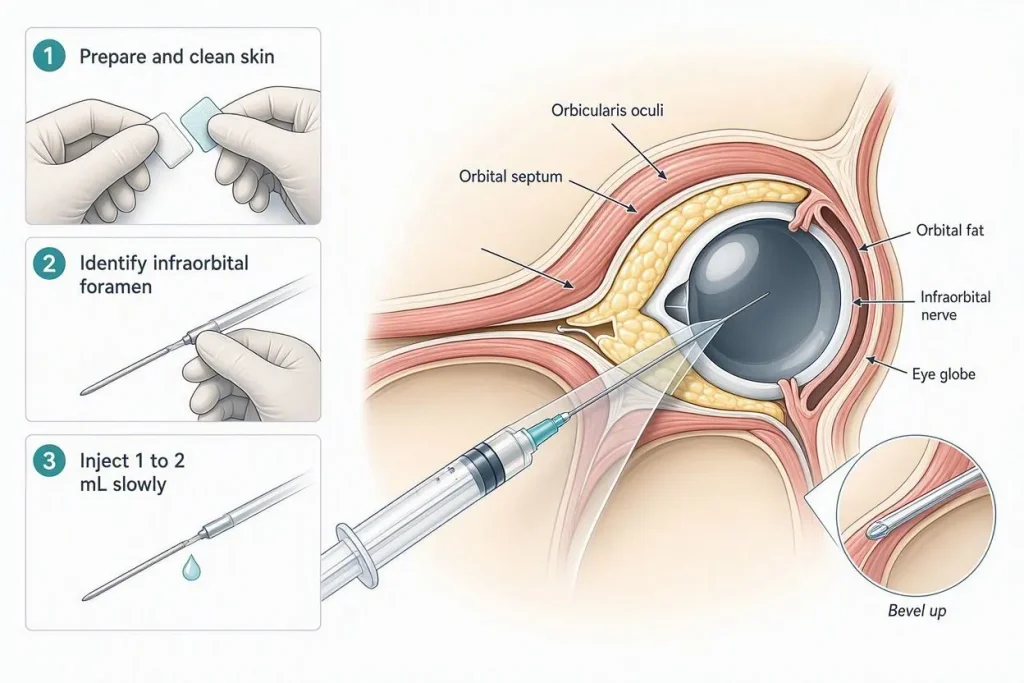
A nerve block involves injecting a local anesthetic around the eye to temporarily numb the nerves responsible for pain and movement. An anesthesiologist carefully administers a nerve block for eye surgery prior to starting the procedure.
Key Benefits
- Provides effective pain relief during surgery
- Reduces eye movement for better surgical accuracy
- Avoids general anesthesia in many cases
- Allows faster recovery after the procedure
- Suitable for many outpatient eye surgeries
Common Types of Nerve Blocks
Common procedures like complex cataract or retinal treatments frequently utilize a nerve block for eye surgery.
| Type | Best Used For | Main Advantage |
| Retrobulbar Block | Retinal and glaucoma surgery | Strong pain control with excellent eye immobility |
| Peribulbar Block | Cataract and general ophthalmic surgery | Lower risk with effective anesthesia |
| Sub-Tenon’s Block | Cataract and vitreoretinal procedures | Needle-free delivery using a blunt cannula, improving comfort |
| Facial Nerve Block | Selected eye surgeries | Prevents eyelid movement when needed |
The choice depends on the procedure, patient health, and the surgeon’s preference.
When Is a Nerve Block for Eye Surgery Recommended?
A nerve block for eye surgery may be used for:
- Cataract surgery
- Retinal surgery
- Vitrectomy
- Glaucoma surgery
- Corneal transplant procedures
- Some eyelid and orbital surgeries
Not every eye procedure requires a nerve block. Less invasive surgeries may only need topical anesthetic eye drops.
What Happens During the Procedure?
The process is usually quick and straightforward.
- Eye drops are applied to numb the surface of the eye.
- A local anesthetic is injected using the selected nerve block technique.
- The anesthetic takes effect within a few minutes.
- Surgery begins once the eye is numb and stable.
Benefits at a Glance
| Benefit | How It Helps |
| Pain Control | Minimizes discomfort during surgery |
| Eye Stability | Reduces unwanted eye movement |
| Faster Recovery | Less recovery time than general anesthesia |
| Lower Systemic Risk | Avoids many risks linked to full anesthesia |
| Outpatient Friendly | Patients usually return home the same day |
Possible Risks
Although complications are uncommon, patients should be aware of potential risks.
- Mild bruising around the eye
- Temporary eyelid swelling
- Small amount of bleeding
- Temporary double vision
- Incomplete numbness requiring additional anesthesia
- Rare infection
- Very rare injury to the eye or optic nerve
These risks are generally low when the procedure is performed by experienced professionals.
Recovery After a Nerve Block
Most patients recover quickly after surgery. The numbing effect of a nerve block for eye surgery gradually wears off a few hours post-operation.
You may experience:
- Temporary numbness around the eye
- Blurred vision for several hours
- Heavy eyelid sensation
- Mild soreness
Recovery Tips
- Avoid rubbing the eye until sensation returns.
- Use prescribed eye drops as directed.
- Wear the protective eye shield if recommended.
- Arrange someone to drive you home.
- Contact your doctor if you experience severe pain or sudden vision loss.
Who May Not Be a Suitable Candidate?
Your doctor may recommend another anesthesia option if you have:
- An active eye infection
- Allergy to local anesthetics
- Certain bleeding disorders
- Difficulty remaining still during surgery
A complete medical evaluation helps determine the safest approach.
Frequently Asked Questions
1. Is a nerve block for eye surgery painful?
Most patients feel only brief pressure or a slight sting during the injection. After that, the eye becomes numb.
2. How long does the numbness last?
Depending on the anesthetic used, numbness usually lasts 2–8 hours.
3. Will I be awake during surgery?
Yes. Most patients remain awake but comfortable. Mild sedation may be given if needed.
4. Is a nerve block safer than general anesthesia?
For many routine eye surgeries, it offers a safe and effective alternative with a shorter recovery period. However, the best option depends on your medical condition and the type of surgery.
Also Read: Corrective eye surgery