
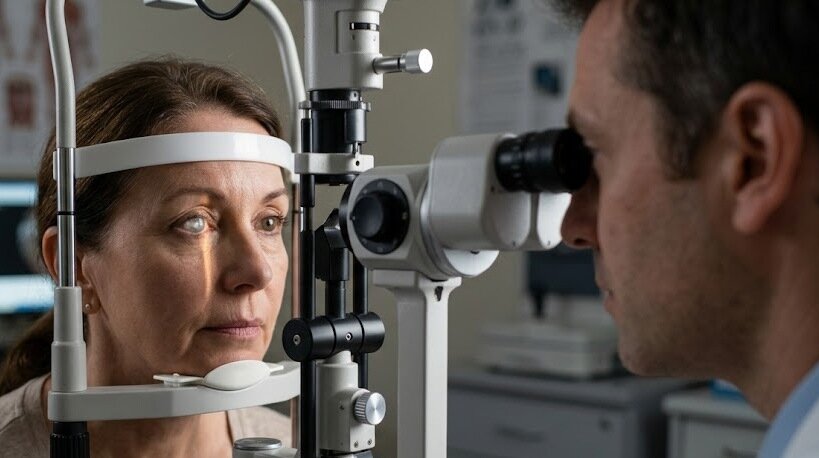
PKP eye surgery, also called penetrating keratoplasty, is a corneal transplant in which the entire thickness of a damaged cornea is replaced with healthy donor tissue. Surgeons consider it when scarring, thinning or cloudiness cannot be corrected with glasses, contact lenses or medicines.
The cornea is the transparent dome at the front of the eye, and PKP is among the most established procedures in ophthalmology. If your doctor has recommended it, you may have many questions. This guide explains the procedure, recovery and what you may realistically expect.
Key Takeaways
- PKP, or penetrating keratoplasty, replaces all layers of the central cornea with healthy donor tissue.
- Doctors generally recommend it for deep scarring, advanced keratoconus, serious infections, injuries and previously failed grafts.
- Corneal stitches usually remain for months, while vision may continue to change for as long as a year.
- In the United States, roughly one in five grafts develops rejection at some point, making prescribed drops and regular follow-up especially important.
- A large NIH-funded study found that approximately three out of four grafts were still successful at ten years.
What Is PKP Eye Surgery?
PKP stands for penetrating keratoplasty. During the procedure, the surgeon removes a circular, full-thickness section from the diseased cornea and stitches a similarly shaped piece of donor tissue into the opening.
The donor cornea is supplied by an eye bank, where it undergoes screening and quality and safety checks before being provided for surgery.
Think of it as replacing a cracked or cloudy windscreen rather than simply cleaning it. Since every corneal layer is replaced, PKP can address conditions that partial procedures cannot.
Who Needs PKP Surgery?
Most patients reach this stage only after less invasive treatments have been tried. Glasses, rigid contact lenses, medicines and corneal cross-linking are often attempted first. PKP may be recommended when the damage is deep or involves multiple corneal layers.
- Advanced keratoconus, where the cornea has thinned, bulged or scarred beyond what lenses can correct
- Dense scars left by infections, injuries or earlier eye surgery
- Corneal dystrophies, which are inherited conditions that slowly cloud the cornea
- Lasting swelling caused by failing inner cells of the cornea
- Severe infections, such as fungal keratitis, that do not respond to medication
- Chemical burns and serious trauma
- A previous graft that has failed or been rejected
In an emergency, such as an infection that may perforate the cornea, the purpose of the operation is to preserve the eye rather than improve sight. This is known as a therapeutic graft.
How PKP Compares With DALK, DSAEK and DMEK
Modern corneal surgery offers several approaches. The choice between PKP eye surgery and a partial graft depends on which corneal layers are diseased, since only the affected layers may sometimes be replaced.
| Procedure | What is replaced | Often considered for |
| PKP | All layers of the central cornea | Deep scars, multi-layer disease, severe injury, failed grafts |
| DALK | Front and middle layers; your own inner layer stays | Keratoconus and scars when the inner layer is healthy |
| DSAEK | Inner layer plus a thin slice of supporting tissue | Inner-layer failure, such as Fuchs dystrophy |
| DMEK | Only the thin inner membrane and its cells | Selected inner-layer disease |
Partial grafts can provide quicker healing, fewer stitches and a reduced risk of rejection. However, they are suitable only when the remaining corneal layers are healthy. If they are not, a full-thickness transplant remains the appropriate option.
How to Prepare for the Operation
Your surgeon will begin with a thorough eye examination. This commonly involves a slit-lamp exam, corneal mapping, thickness measurements and assessment of the inner corneal cells. These tests help confirm that PKP eye surgery is appropriate and determine the graft size.
Other eye conditions are important as well. Glaucoma, inflammation, dry eye and previous herpes infection can increase risks to a graft, so these problems are treated or brought under control when possible.
Give your surgical team a complete list of your medicines, and do not stop any medication without their advice. Follow the fasting directions and arrange transportation home because the operated eye will be covered.
What Happens in the Operating Room
PKP eye surgery is generally performed as day surgery. Depending on the situation, you may receive local anaesthesia with sedation or general anaesthesia, particularly if you are very anxious, cannot remain still or are a child.
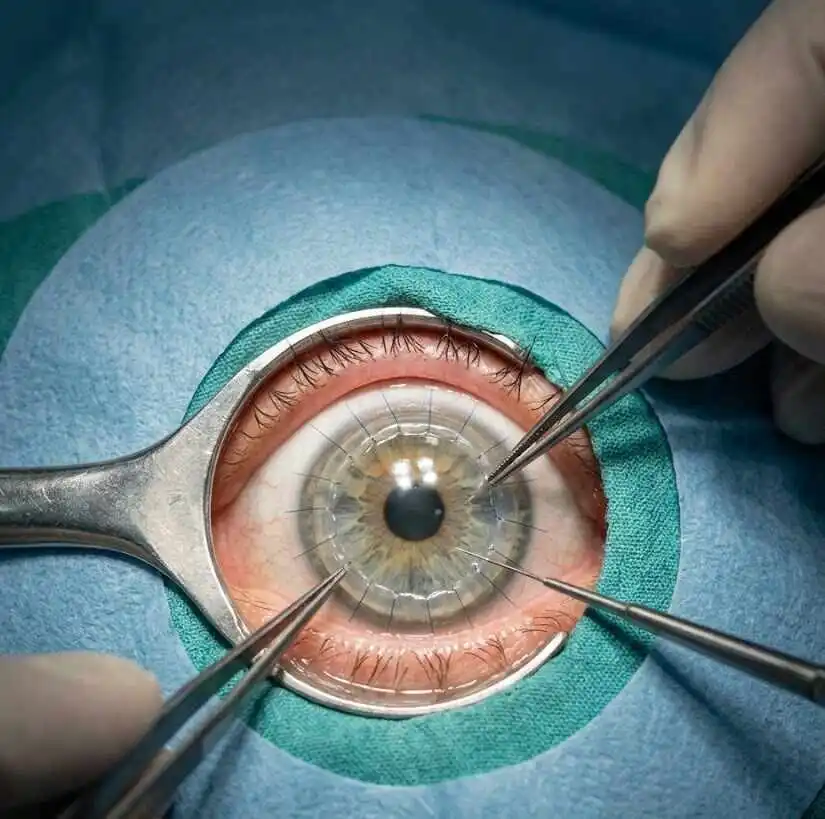
The surgeon prepares the donor disc first so it is available if rapid closure becomes necessary. A circular instrument called a trephine is then used to remove the damaged central cornea. The donor disc is commonly made slightly larger than the opening to help the wound close securely.
Very fine nylon stitches secure the donor tissue. Depending on the surgeon’s technique, these may be individual stitches, one continuous stitch or a combination. Their tension is important because it influences the shape of the transplanted cornea.
The procedure is completed with antibiotic and steroid medicines, followed by a soft patch and a protective plastic shield over the eye.
Recovery After PKP Eye Surgery
Recovery takes time. Vision is often blurred initially and may fluctuate from week to week while the corneal surface heals and the stitches are adjusted.
The first days and weeks
During the early period, watering, mild irritation and light sensitivity are common. Antibiotic drops help prevent infection, while steroid drops reduce inflammation and help lower rejection risk. Use the nighttime shield as instructed and avoid rubbing or pressing the eye.
Until your surgeon gives you clearance, avoid swimming, dusty environments, heavy lifting and contact sports.
The following months
At follow-up visits, your surgeon will examine the graft, monitor eye pressure and assess the stitches. Sutures are generally removed gradually over several months, and sometimes longer. Changes in the stitches can also change your prescription.
Vision may take nearly a year to fully recover. Many patients still require glasses or a rigid contact lens because the transplanted cornea is seldom perfectly spherical.
The long term
Steroid drops are normally reduced gradually, and some patients need a small maintenance dose for an extended period. Do not stop them without medical advice. Continue regular checkups even when the eye feels normal because a graft requires lifelong monitoring.
Risks and Complications
PKP eye surgery has a well-established record, but it still carries potential complications. Your surgeon should discuss the following risks with you:
- Graft rejection: the immune system attacks the donor tissue. It is the most common complication.
- Infection: loose stitches can let germs in, so report any new redness or discharge promptly.
- High eye pressure and glaucoma: these can appear after surgery or because of long-term steroid use.
- Cataract: surgery and steroids can speed up clouding of the lens.
- Astigmatism: uneven curvature is common and may need lenses or further treatment.
- Wound leak: the incision can reopen after an injury, even years later, so wear protective eyewear for risky activities.
- Graft failure: the donor’s inner cells can stop working, causing cloudiness that may call for a repeat transplant.
- Return of the original disease: herpes keratitis and some dystrophies can come back in the new graft.
Signs of Graft Rejection You Should Never Ignore
Rejection may develop weeks, months or even years after PKP surgery. National Eye Institute figures indicate that it affects roughly one in five grafts in the United States.
Call your eye doctor the same day if you notice any of these:
- A drop in vision
- New or increasing redness
- Pain or growing discomfort in the operated eye
- Unusual sensitivity to light
When rejection is identified early, intensive steroid drops can often reverse the episode. Do not wait until your next routine appointment if symptoms appear.
How Successful Is PKP Eye Surgery?
The outcome depends greatly on the reason for transplantation. The NIH-funded Cornea Donor Study monitored grafts for ten years and found about 86 percent success at five years and roughly 75 percent at ten years; donor age across a broad range had little effect.
Keratoconus generally has better long-term outcomes than many other conditions. One long-term study estimated a 12 percent failure risk at 20 years for keratoconus grafts. Greater risks occur in eyes with corneal blood vessels, active inflammation, a history of herpes or multiple previous grafts.
A transparent graft does not necessarily mean vision will be sharp. Conditions elsewhere in the eye, including glaucoma or retinal disease, can restrict the final visual result. Discuss realistic expectations with your surgeon before the operation.
Questions to Ask Your Surgeon
- Why a full-thickness graft rather than DALK or DMEK in my case?
- How long will the stitches stay, and who will remove them?
- How long will I need steroid drops, and what side effects should I watch for?
- Which symptoms mean I should call the same day?
- What vision can I realistically expect, and will I need glasses or lenses?
- When can I return to work, driving and sport?
Frequently Asked Questions
Is PKP eye surgery painful?
You should not feel pain during the operation because the eye is anaesthetised or you are asleep. For several days afterward, scratchiness, watering and a dull ache can occur. Severe or worsening pain should be reported to your surgeon.
How long does it take to recover from PKP eye surgery?
The corneal surface generally settles over several weeks, but vision can continue changing for months. Because stitches are removed gradually and prescriptions may change, the final visual result can take close to a year.
What is the success rate of PKP eye surgery?
A large NIH-funded study found that about 86 percent of grafts were successful at five years and around 75 percent at ten years. Keratoconus often has better outcomes, whereas higher-risk eyes tend to have poorer results.
How long do the stitches stay in after penetrating keratoplasty?
Stitches generally remain for several months and can sometimes stay longer than a year. Your surgeon removes them gradually according to the healing process. Never cut or remove a stitch yourself, and report a loose or broken stitch promptly.
Will I need glasses after PKP eye surgery?
Most patients need them. The transplanted cornea commonly has some astigmatism, making glasses or a rigid contact lens useful. If these do not provide enough correction, options may include stitch adjustment, relaxing incisions, laser treatment or lens-based procedures.
Bottom Line
PKP eye surgery can give people with severely damaged corneas a meaningful opportunity for clearer and more comfortable vision. It also requires months of patience, daily medication and lifelong follow-up.
Whether PKP is appropriate depends on which corneal layers are affected. Ask your surgeon why a full-thickness graft is recommended instead of a partial transplant. If vision deteriorates or the eye becomes painful after a corneal transplant, contact your doctor the same day.