
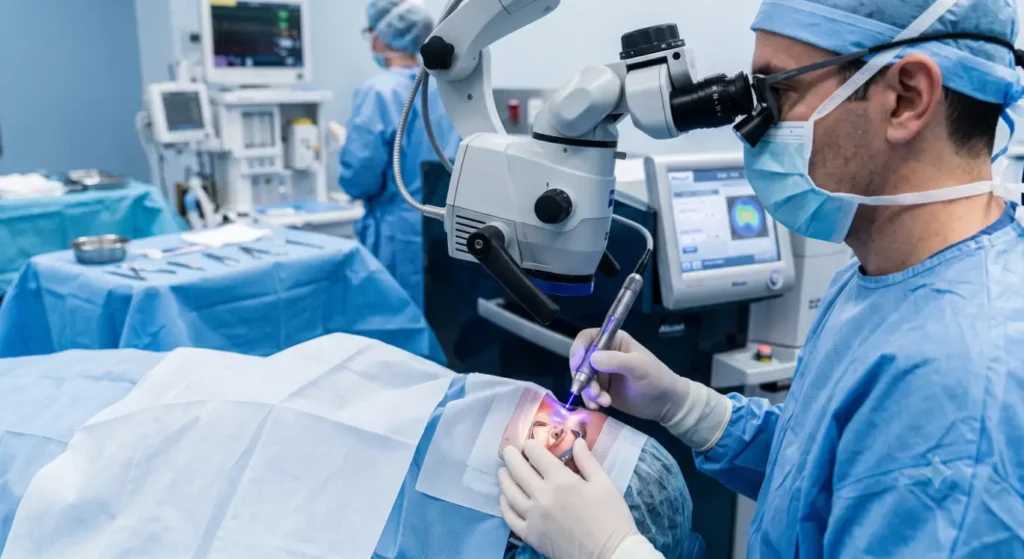
PTK eye surgery is one treatment that can help in selected cases. PTK stands for phototherapeutic keratectomy. It uses an excimer laser to remove a thin layer of unhealthy or irregular corneal tissue and create a smoother surface.
Key Takeaways
- PTK uses an excimer laser to treat selected corneal surface problems.
- It can help with corneal scars, erosions, and surface irregularities.
- PTK is different from LASIK and is not primarily used to remove glasses.
- Recovery may include blurred vision, irritation, tearing, and light sensitivity.
The cornea is the clear front part of the eye that helps focus light and plays an important role in clear vision. When its surface becomes scarred, rough, damaged, or affected by certain eye conditions, you may experience blurred vision, eye pain, watering, or sensitivity to light.
Unlike LASIK, PTK is not mainly performed to remove glasses. Its purpose is to treat specific problems affecting the cornea.
What Is PTK Eye Surgery?
PTK Eye Surgery is a laser procedure used to treat certain superficial corneal disorders. During treatment, an ophthalmologist uses an excimer laser to carefully remove abnormal tissue from the outer layers of the cornea.
The procedure may be recommended for problems such as:
- Scarring on the corneal surface
- Recurrent corneal erosions
- Certain corneal diseases or dystrophies
- Certain degenerative changes in the cornea
- Irregularity or unevenness of the corneal surface
A comprehensive eye examination is conducted first to determine whether PTK is the right treatment for you.
Also Read:Pterygium Eye Surgery: Before and After
How is PTK eye surgery performed?
PTK is typically performed as an outpatient procedure, meaning hospitalization is not required. Before the treatment, anesthetic drops are administered to temporarily numb the eye; consequently, there is usually no pain or significant discomfort during the laser application.
The surgeon typically:
Prepares and cleans the eye.
Removes the affected surface layer of the cornea when required.
Uses an excimer laser to remove a controlled amount of abnormal tissue.
Treats the corneal surface to make it smoother.
Places a bandage contact lens over the eye in many cases to support healing.
The actual laser treatment is usually short, but the total time at the clinic can be longer because of preparation and postoperative care.
Why Is PTK Performed?
The main aim of PTK is to improve the condition of the corneal surface.
For example, recurrent corneal erosion can cause repeated episodes of pain, watering, redness, and discomfort. These symptoms may occur when the surface layer of the cornea does not attach properly to the tissue underneath. In suitable patients, PTK can remove the irregular surface and encourage healthier healing.
It may also improve vision when a superficial scar or irregularity is interfering with the passage of light through the cornea.
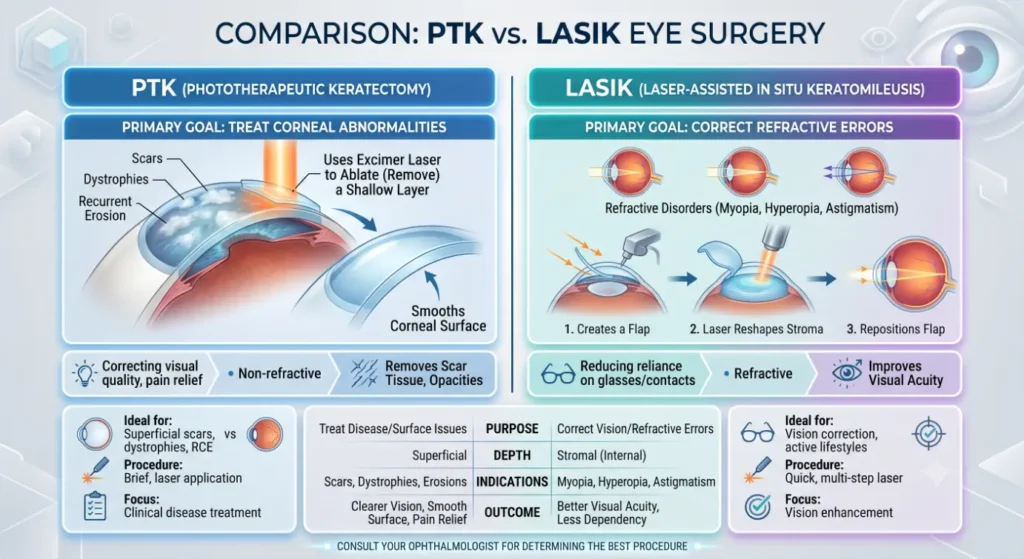
PTK vs LASIK
Both procedures use an excimer laser, but they have different purposes.
| Feature | PTK | LASIK |
| Main purpose | Treat selected corneal disorders | Correct refractive errors |
| Common use | Scars, erosions, surface irregularities | Myopia, hyperopia, astigmatism |
| Main target | Superficial abnormal corneal tissue | Corneal shape |
| Primary goal | Improve corneal surface and function | Reduce dependence on glasses |
| Suitable for | Selected corneal conditions | Selected refractive errors |
Your ophthalmologist can recommend the appropriate procedure based on your eye condition.
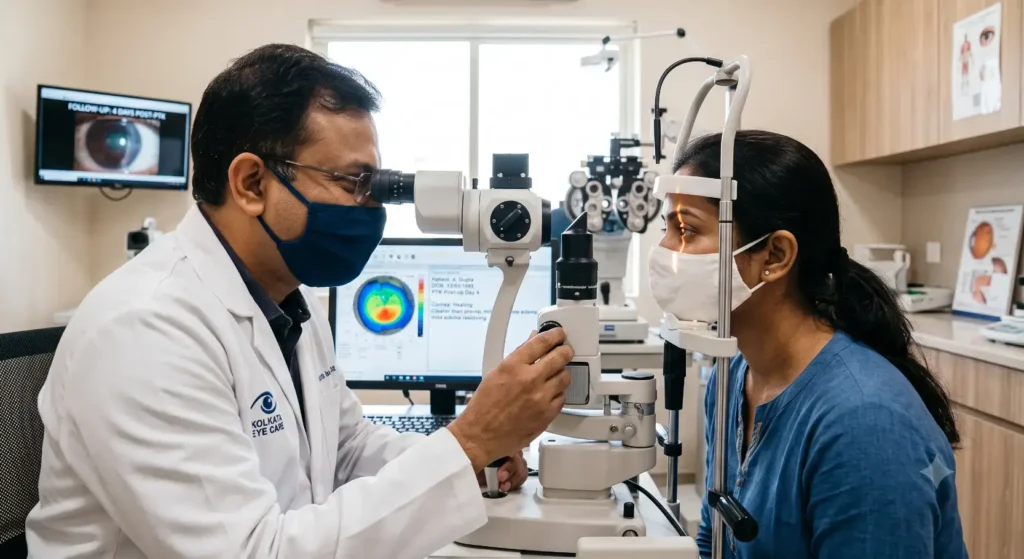
Benefits of PTK Eye Surgery
For appropriately selected patients, PTK may provide several benefits:
• Removes certain unhealthy or damaged surface tissue
• Helps create a smoother corneal surface
• May reduce symptoms from recurrent corneal erosions
• Can improve vision when superficial corneal problems are affecting it
• May reduce the effect of some superficial scars or deposits
• Usually does not require an overnight hospital stay
Recovery After PTK Eye Surgery
The first few days following PTK Eye Surgery can feel uncomfortable as the cornea’s surface gradually repairs itself. Some temporary symptoms are common during this early healing period, including:
• Excessive watering or tearing of the eyes
• Redness and a burning sensation in the eyes
• Temporary blurred vision
• Increased sensitivity to light
• A sandy, gritty, or “something in my eye” feeling
• Mild to moderate eye discomfort
Possible Risks
PTK is considered a useful treatment for selected corneal conditions, but it is not completely risk-free. Possible complications include:
• Infection
• Delayed surface healing
• Corneal haze
• Temporary changes in vision
• Light sensitivity
• Changes in refractive power
• Recurrence of the original condition
Your eye specialist should explain the possible risks and expected results before surgery.
Also Read: YAG Eye Surgery: What You Should Know
Frequently Asked Questions About PTK Eye Surgery
1. Can PTK improve vision?
PTK may improve vision when a superficial scar, irregularity, or other corneal surface problem is interfering with clear vision. However, the result depends on the underlying eye condition and the deeper health of the cornea.
2. Will I need glasses after PTK?
You may still need glasses after PTK. The procedure is not primarily designed to eliminate the need for spectacles. Changes in the corneal surface after treatment can also affect the eye’s refractive power.
3. Can the corneal problem recur after PTK Eye Surgery?
In some cases, the condition treated with PTK can return. The likelihood depends on the specific corneal disorder and other individual factors. Regular follow-up with your ophthalmologist can help detect any recurrence early.