Corrective Eye Surgery
- Home
- Corrective Eye Surgery

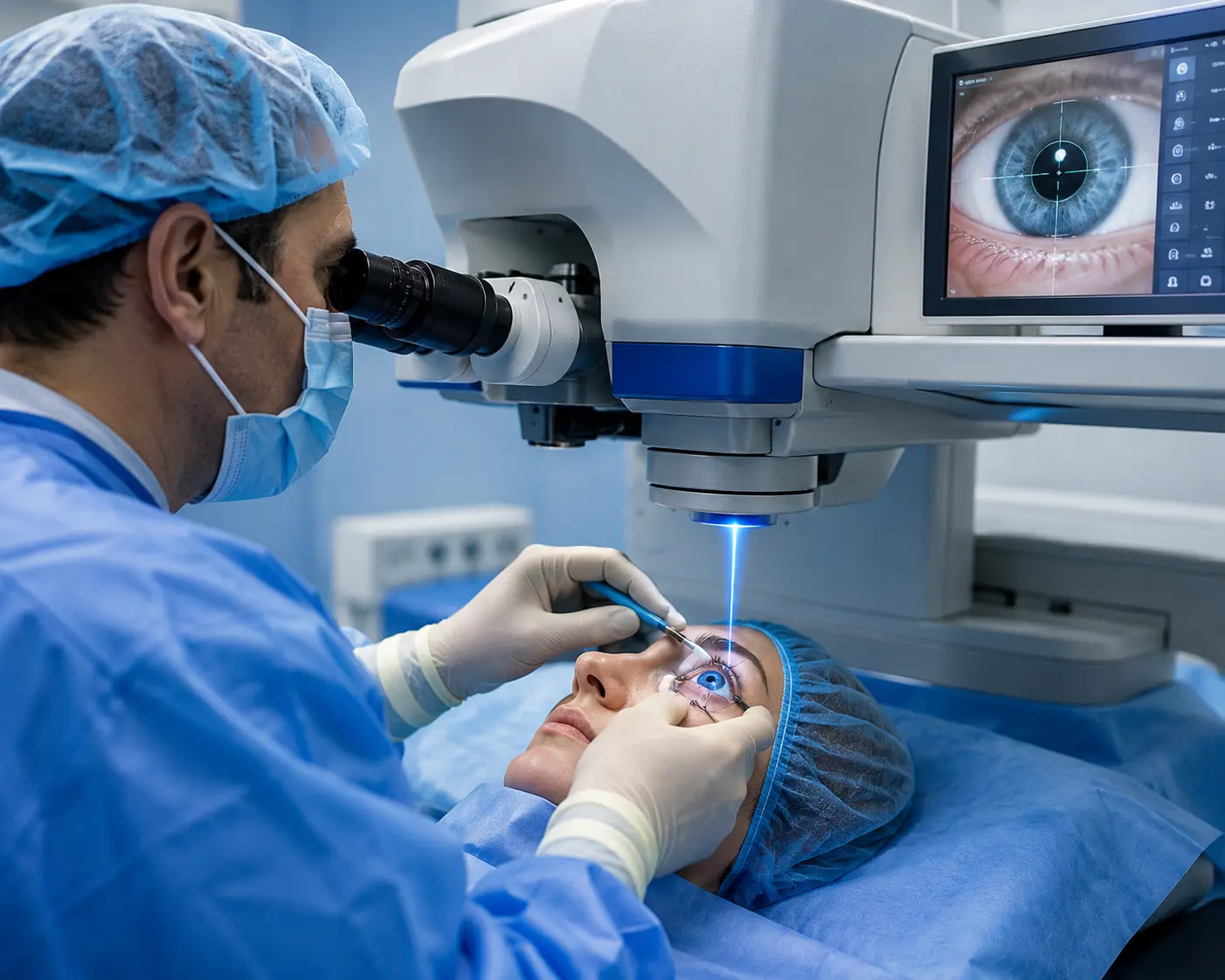
Good vision plays a central role in daily life, from reading and driving to working, using screens, and recognizing faces across a room. Glasses and contact lenses address many of these issues, but some people look into surgical options that might reduce how much they rely on them.
Corrective eye surgery covers a range of procedures designed to treat different vision problems. The most suitable option depends on factors like the patient’s eye condition, age, prescription, corneal structure, and general eye health. A thorough examination by an ophthalmologist is essential before any decision about surgery is made.
Corrective eye surgery refers to a group of procedures aimed at improving vision by altering how light enters or focuses inside the eye. These procedures can be used to manage common refractive conditions such as:
Not every procedure suits every vision problem. The choice depends on the person’s individual eye measurements and medical history.
LASIK, which means laser-assisted in situ keratomileusis, is a common surgical option for correcting certain refractive errors. The procedure changes the shape of the cornea to help incoming light reach the retina with better focus.During LASIK, the surgeon makes a small flap on the surface of the cornea. A laser then precisely removes a controlled amount of corneal tissue underneath the flap. After the reshaping is complete, the flap is carefully placed back in position, where it naturally begins to heal. LASIK can be used for selected cases of myopia, hyperopia, and astigmatism. That said, having a suitable prescription alone does not confirm eligibility. The cornea must also be evaluated for its thickness, shape, and general condition before treatment is considered.
Photorefractive keratectomy, commonly known as PRK, is a laser-based vision correction procedure used to treat certain refractive errors. Unlike LASIK, this technique does not require the surgeon to create a flap in the cornea. During PRK, the thin surface layer of the cornea is gently removed to expose the tissue underneath. A laser is then used to reshape this tissue according to the patient’s vision requirements. The outer layer gradually regenerates as the eye heals.This surface layer gradually regenerates as the eye heals. PRK may be a better fit for people whose corneal characteristics make LASIK less appropriate. Recovery tends to take longer than with LASIK, since the corneal surface requires more time to heal.
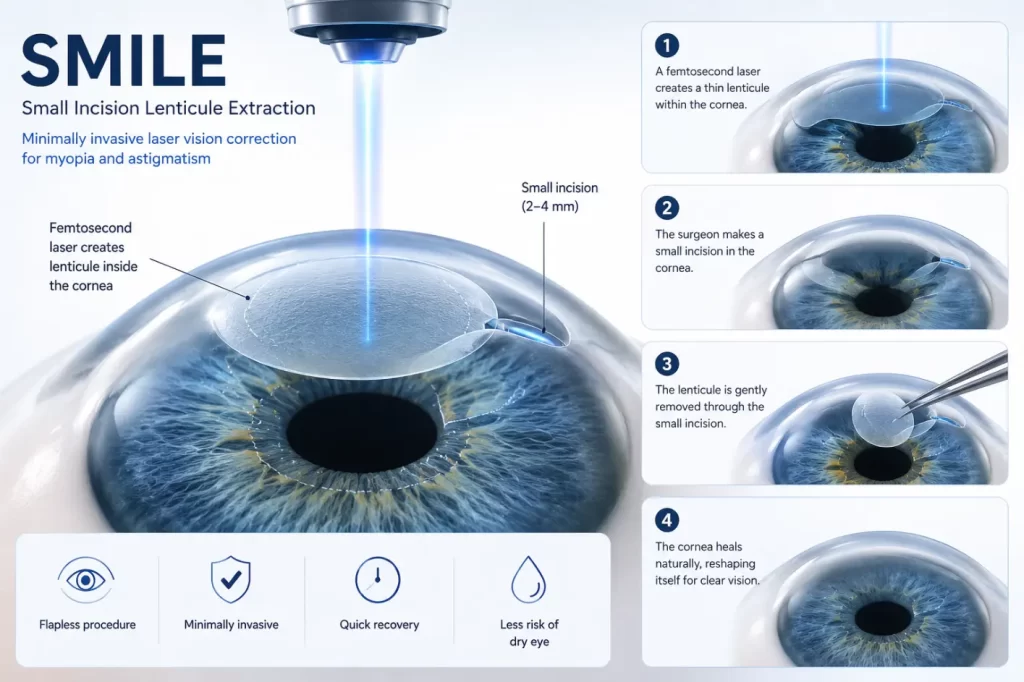
Small Incision Lenticule Extraction, commonly known as SMILE, is a laser-based vision correction technique designed to reshape the cornea. In this laser procedure, a small disc of corneal tissue called a lenticule is formed inside the cornea. The surgeon removes the lenticule through a small opening, which changes the cornea’s shape and improves how light is focused. SMILE is mainly used for myopia and may also be appropriate for certain cases of astigmatism. An ophthalmologist must confirm whether the patient’s eye measurements make them a suitable candidate.
Lens replacement surgery restores vision by removing the eye’s existing lens and implanting a suitable artificial intraocular lens (IOL). This procedure is most commonly performed for cataracts, which cause the natural lens to cloud over. In some cases, lens replacement may also be considered for refractive purposes. Several types of intraocular lenses are available, and the most appropriate one depends on factors such as eye health, lifestyle, visual needs, and what the patient hopes to achieve.
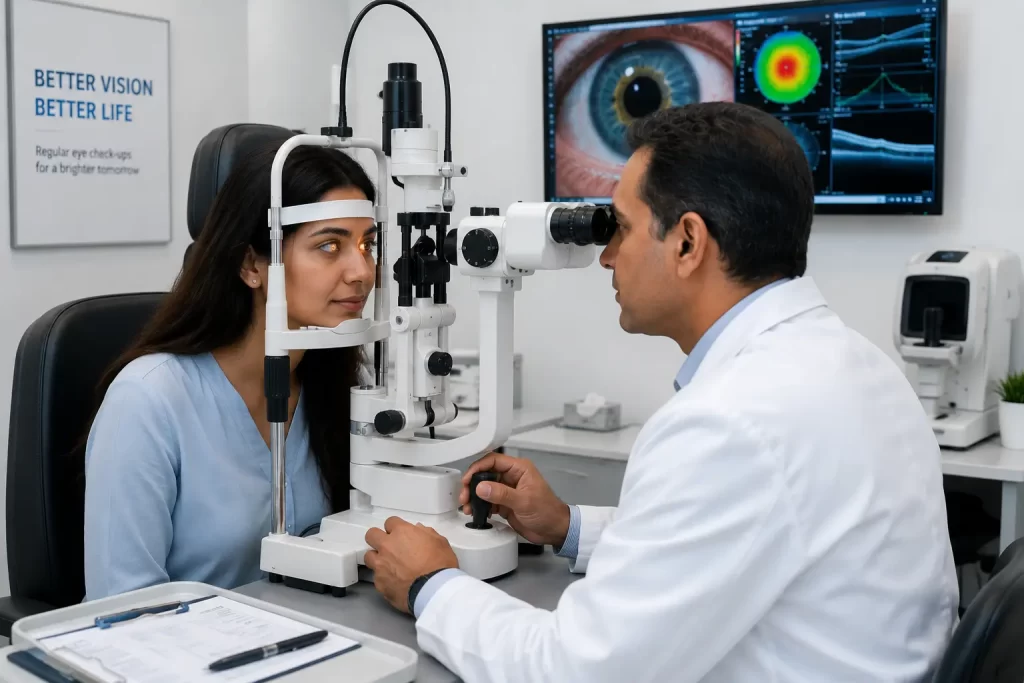
Corrective eye surgery is not right for everyone. An ophthalmologist typically carries out a series of tests before recommending any procedure. The evaluation usually covers:
Also Read: How Much Does Eye Surgery Cost?
People with certain corneal conditions, significant dry eye, active eye disease, or other health concerns may not be good candidates for some procedures. A stable eyeglass or contact lens prescription is often an important factor before undergoing laser vision correction. A detailed eye assessment allows the ophthalmologist to determine whether the patient is a suitable candidate and which procedure may be appropriate.
The primary aim of corrective eye surgery is to improve vision and potentially reduce reliance on glasses or contact lenses. Depending on the procedure and the individual’s outcome, potential benefits may include:
Results differ from person to person. Surgery does not always eliminate the need for glasses entirely, particularly for specific tasks or as vision naturally changes with age.
While corrective eye surgery can deliver good visual outcomes for many suitable patients, it also carries potential risks. Temporary effects can include: *
In some cases, the intended level of correction may not be fully achieved. Certain patients may need additional treatment or still require glasses for particular activities. Serious complications are uncommon but possible. Before going ahead, patients should talk through potential complications, expected outcomes, alternative treatments, and their individual risk profile with their ophthalmologist.
Recovery looks different depending on the procedure and how each patient heals. Some people notice a meaningful improvement in vision fairly soon after certain laser procedures. Others need more time before their vision fully stabilizes. PRK, for instance, generally involves a longer surface-healing period compared to LASIK. After surgery, the doctor will typically prescribe eye drops and outline specific precautions.
Patients are usually advised to avoid rubbing their eyes and to temporarily steer clear of activities that could disrupt the healing process. Attending scheduled follow-up appointments is important. These visits allow the ophthalmologist to monitor healing, check vision, and catch any complications that may need attention.
Also Read:Nerve Block for Eye Surgery
The type of surgery determines which vision problems can be treated. Procedures designed to correct refractive errors may improve nearsightedness, farsightedness, and astigmatism. Lens-based treatments can also help patients whose vision has been affected by cataracts or changes in the eye’s natural lens.
Most laser-based vision procedures are performed with numbing eye drops, so patients typically experience little or no pain during treatment. After surgery, temporary symptoms such as dryness, watering, mild irritation, or a burning sensation may occur as the eyes recover.
The recovery period varies according to the surgical technique and the patient’s individual eye health. Some people experience noticeable visual improvement within a short period, while others may require several days or longer for their eyesight to become consistently clear.
No. LASIK requires a thorough assessment before it can be recommended. An eye specialist may evaluate the shape and thickness of the cornea, stability of the prescription, tear-film condition, overall eye health, and any existing eye disorders to determine whether the procedure is appropriate.
Some patients may require them for reading, night driving, or detailed close-up tasks. Normal age-related changes in eyesight can also lead to the need for reading glasses in the future.
Temporary visual or eye-related symptoms can occur during recovery. These may include dry eyes, light sensitivity, temporary blurring, glare, or halos around lights.
Begin with a comprehensive eye examination by a qualified ophthalmologist. Ask about the procedures that may be suitable for you, expected visual outcomes, recovery requirements, possible risks, and nonsurgical alternatives.