
Precautions after eye surgery are essential for preventing infection and ensuring a smooth, successful recovery process.
Good vision is the key that lets you take advantage of all the great things life has to offer. When you have surgery to give yourself back the gift of clear vision, then understanding what lies ahead will help you tremendously.
These surgeries are very safe and successful, but in order to get the best possible outcome, you have to follow your recovery instructions. By taking care to prevent infection, eye strain, and other issues after your eye surgery, you allow your eyes to be in an environment where they can heal well.
Table of Contents
Key Takeaways
- Precautions after eye surgery protect your vision.
- Avoid rubbing eyes to prevent potential injury.
- Always take prescribed drops on schedule.
Why Precautions after Eye Surgery (Post-operative care) Matter
The eyes will require some time after surgery to heal properly. In this phase, the eyes are much more susceptible and vulnerable to any irritation or infections. Taking appropriate care can help the eye heal properly and recover well.
Following precautions after eye surgery protects your delicate eyes while they recover from the procedure.
Advantages of Eye Care
- Quick healing process
- Protection from infections
- Protection of the operated eye
- Recovery is enhanced
- Achieves optimal vision

Key Precautions After Eye Surgery to Protect Your Vision
Important precautions after eye surgery include avoiding rubbing your eyes or exposing them to water. Following a few simple guidelines can help your eyes heal comfortably.
| Essential Do’s | Important Don’ts |
| Apply medication on schedule: Administer all prescribed drops and ointments exactly as directed by your surgeon. | Never touch or rub the surgical area: Pressing or rubbing your eyes can cause trauma and disrupt healing tissue. |
| Maintain hand hygiene: Thoroughly wash your hands with soap and water before applying drops or cleaning around your eye. | Hold off on water activities: Skip swimming pools, hot tubs, and open water until cleared by your specialist to prevent infection. |
| Shield your eyes from light: Put on UV-blocking sunglasses when stepping outside to minimize glare and light sensitivity. | Pace yourself physically: Refrain from heavy lifting, bending over, or high-intensity workouts during the initial recovery phase. |
| Use your night guard: Wear the protective shield provided, especially while sleeping, to prevent accidental rubbing. | Delay driving: Stay out of the driver’s seat until your ophthalmologist confirms your vision meets safe driving standards. |
| Keep every post-op visit: Attend all scheduled follow-ups so your physician can monitor your progress and catch potential issues early. | Steer clear of airborne irritants: Avoid places with heavy dust, fumes, or tobacco smoke that could inflame sensitive eyes. |
| Prioritize rest: Give your eyes and body plenty of downtime to speed up tissue repair. | Pause cosmetic application: Hold off on applying eye makeup, creams, or powders near the eye until you get the green light. |
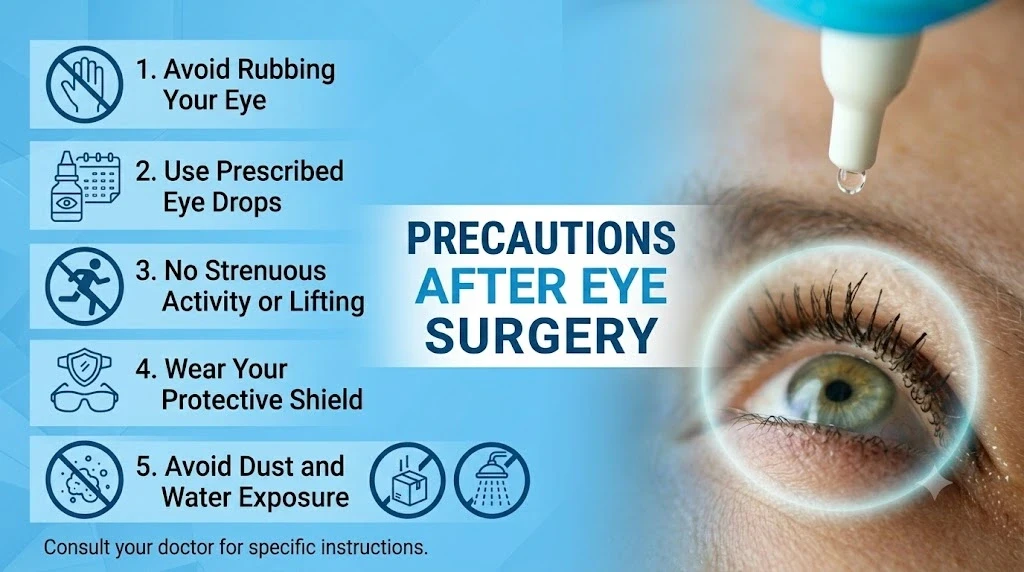
Precautions after Eye Surgery – Activities to Avoid
Adhering to precautions after eye surgery requires using your prescribed medicated eye drops as directed.
Your ophthalmologist may recommend avoiding certain activities for a few days or weeks, depending on the type of surgery.
| Activity | Reason to Avoid |
| Swimming | Reduces the risk of eye infection |
| Heavy lifting | Prevents increased pressure inside the eye |
| Vigorous exercise | Allows proper healing of the surgical site |
| Eye rubbing | Protects delicate healing tissues |
| Driving | Vision may remain blurry during the initial recovery period |
| Contact sports | Prevents accidental injury to the operated eye |
Always resume these activities only after your doctor confirms it is safe.
Warning Signs to Watch For
While mild discomfort and temporary blurred vision are common, some symptoms require immediate medical attention.
| Warning Sign | Recommended Action |
| Sudden vision loss | Contact your ophthalmologist immediately |
| Severe or increasing eye pain | Seek urgent medical care |
| Persistent redness or swelling | Schedule a prompt eye examination |
| Thick or excessive eye discharge | May indicate infection—consult your doctor |
| Flashes of light or new floaters | Requires immediate retinal evaluation |
Early diagnosis and treatment can help prevent serious complications.
Recovery Checklist
Wearing a protective eye shield is one of the most effective precautions after eye surgery. Before resuming your daily routine, ensure you’ve followed these important recovery measures.
| Checklist | Status |
| ✓ Using prescribed eye drops correctly | ✓ |
| ✓ Wearing protective eyewear when advised | ✓ |
| ✓ Avoiding eye rubbing | ✓ |
| ✓ Attending follow-up appointments | ✓ |
| ✓ Avoiding swimming and strenuous activities | ✓ |
| ✓ Wearing sunglasses outdoors | ✓ |
| ✓ Reporting unusual symptoms promptly | ✓ |
Concluding Thoughts
The eye surgery recovery process entails following the necessary steps in order to achieve optimal results. Compliance with your medication, ensuring that you rest your eyes, and the follow-up treatment by experts gives your vision the help it needs in healing properly. Always bear in mind that the best source of information regarding post-surgery procedures and symptoms is your eye care professional.
Make an appointment with the specialists at Revive Nursing Home for the best care of your eyes. Discussing customized precautions after eye surgery with your doctor ensures you heal safely and quickly.
Frequently Asked Questions
1. What is the time period needed to fully recover from eye surgery?
The recovery period depends upon the kind of eye surgery one has undergone. Though many patients feel better within a couple of days, others may require several weeks to several months for full recovery. The ophthalmologist will guide you regarding this.
2. Can I use my cell phone and TV after eye surgery?
Yes, you can use them occasionally if your eyes are comfortable enough.
3. When can I resume my exercises after eye surgery?
Moderate forms of physical exercise like walking may be permitted after a few days, but vigorous physical activity, heavy lifting, swimming, and contact sports must be refrained from till the doctor says it’s okay.
4. How can I act upon the occurrence of pain or any vision-related problems?
While slight pain is expected after surgery, extreme pain, vision loss, increasing redness, inflammation, and discharge must be promptly reported to your ophthalmologist.
Also Read: Glaucoma eye surgery