
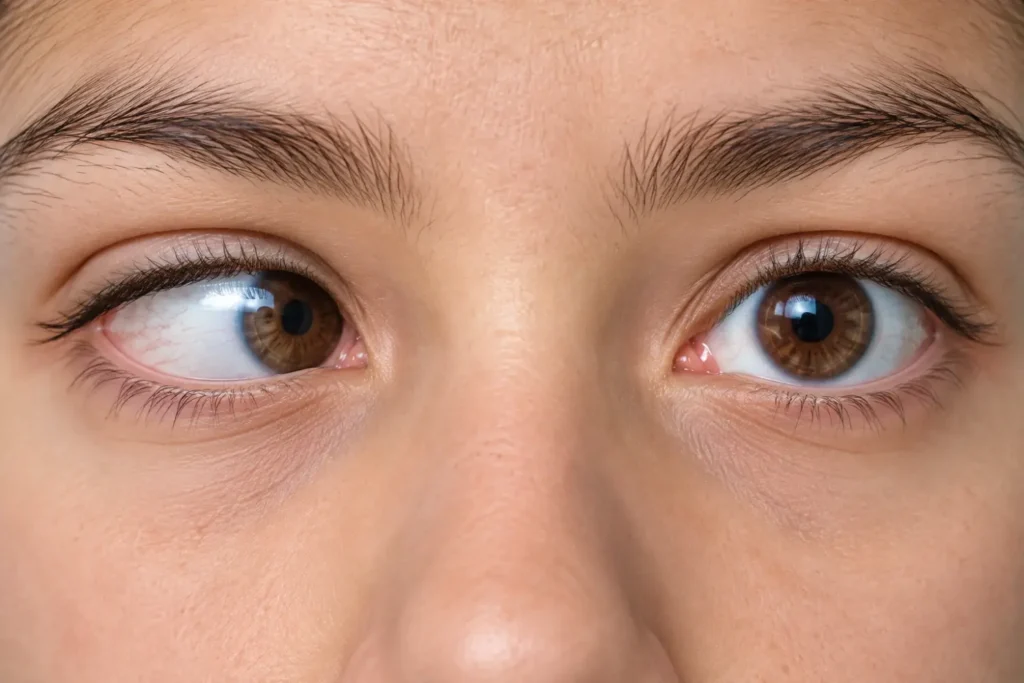
When the eyes do not stay properly aligned, it can cause what is commonly called a Squint Eye or squint. The medical name for a squint is strabismus, a condition where the eyes are not properly aligned. One eye may remain focused ahead while the other moves inward, outward, upward, or downward. In some cases, Squint Eye Surgery may be recommended to improve the alignment of the eyes when other treatment options are not sufficient.
Key Takeaways
- Squint surgery corrects misaligned eyes.
- Treatment depends on the type of squint.
- Recovery varies from patient to patient.
- Children and adults may need surgery.
It can occur in children or develop later in life. For some people, the condition can be managed with glasses or other non-surgical treatments without the need for an operation. However, when the eyes continue to remain misaligned, an ophthalmologist may recommend squint eye surgery.
Also Read:ICL Eye Surgery: A Complete Guide to the Procedure
What Is Squint Eye Surgery?
Squint eye surgery is performed to correct the position of the eyes by adjusting the muscles that control their movement. These muscles are located around the outside of the eyeball and help the eyes move in different directions.
The exact approach depends on how the eyes are misaligned and which muscles are involved. The main aim is to bring the eyes into a better position.
When Might Surgery Be Needed?
Having a squint does not automatically mean that surgery is necessary. An eye specialist will first assess the patient’s vision, eye movements, degree of misalignment, and previous treatment.
Surgery may be discussed when:
- The eyes remain misaligned even after wearing prescribed glasses
- The squint is persistent or noticeable
- Eye misalignment causes double vision
- The eyes have difficulty working together
- A child’s normal visual development may be affected
- Earlier treatment has not produced the expected improvement
The decision depends on the individual patient. There is no single treatment that works for every type of squint.
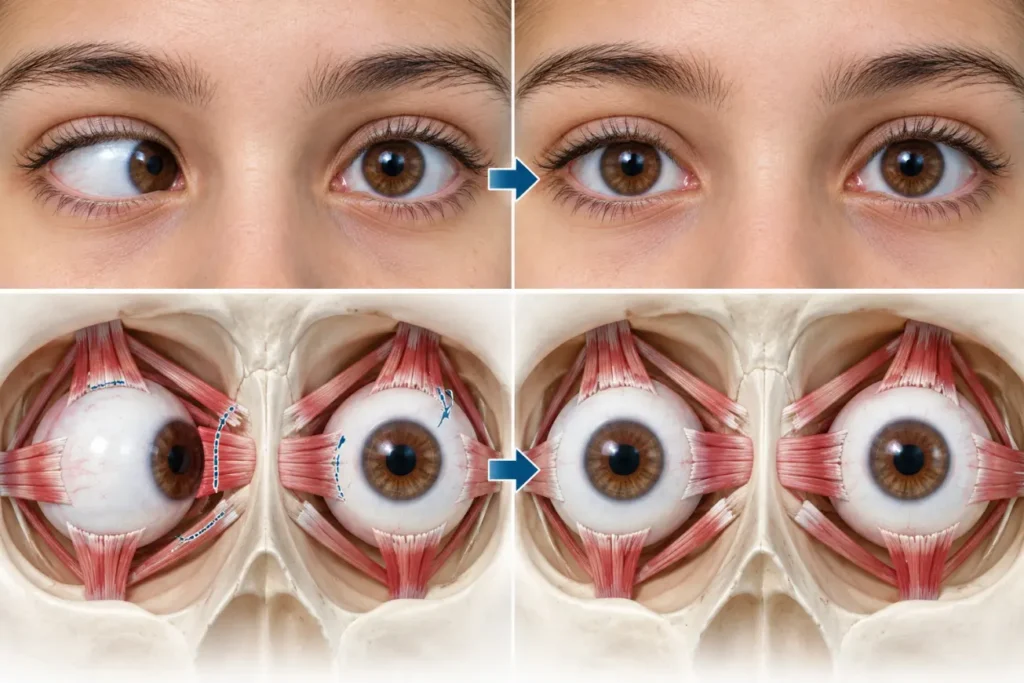
Different Types of Squint
Squint can be classified according to the direction in which the eye moves away from its normal position.
| Type | Description |
| Esotropia | The eye turns inward toward the nose |
| Exotropia | The eye turns outward away from the nose |
| Hypertropia | One eye sits higher than the other |
| Hypotropia | One eye sits lower than the other |
A person can also have a combination of different types of eye misalignment.
What Happens During Squint Eye Surgery?
Before the operation, the ophthalmologist carefully checks the position of the eyes and measures the amount of misalignment. Eye movements and the way both eyes work together are also assessed.
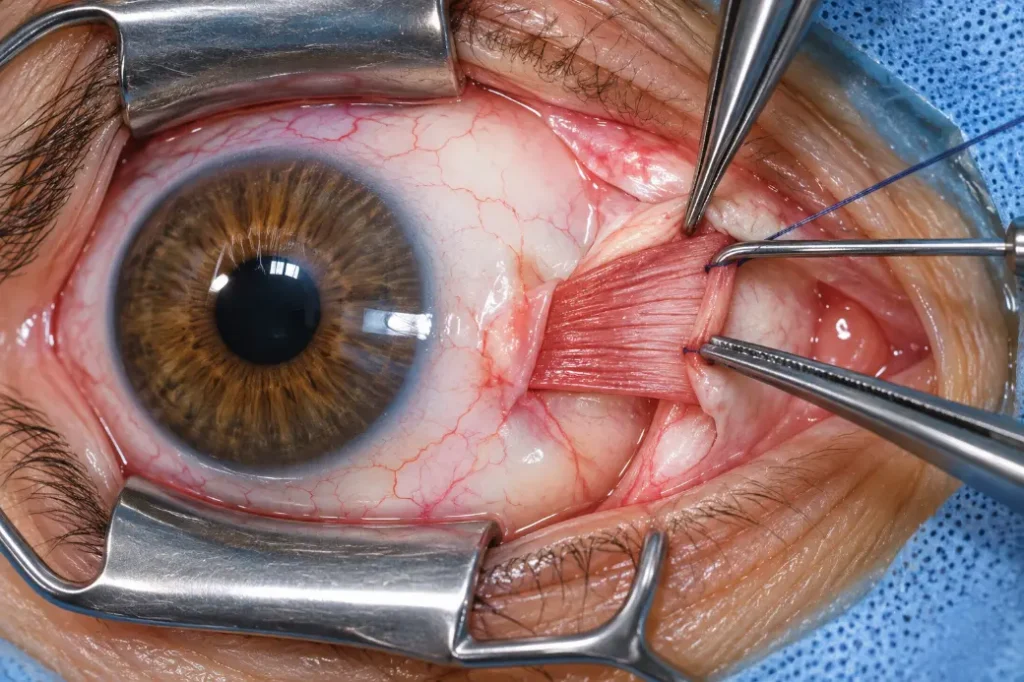
During the procedure, the surgeon reaches the affected eye muscle through a small opening in the conjunctiva, which is the thin layer covering the white part of the eye.
The muscle may then be repositioned or adjusted. Two common techniques include:
- Recession: The muscle is moved farther back so that its pulling effect becomes weaker.
- Resection: Part of the muscle is shortened so that its action becomes stronger.
For some adults, the surgeon may use an adjustable suture. This can allow a small change to the muscle position after surgery if further adjustment is needed.
Recovery After Squint Eye Surgery
It is normal to notice some redness, mild discomfort, irritation, or swelling after the procedure. These symptoms generally reduce as the eye heals.
Your ophthalmologist may advise you to:
- Apply prescribed eye drops or medication
- Avoid touching or rubbing the operated eye
- Attend all follow-up examinations
- Avoid strenuous activity during the initial recovery period
Recovery is not exactly the same for everyone. Your doctor will provide specific instructions based on your surgery and overall eye condition.
Also ReadEye Surgery Types: 7 Procedures
Are There Any Risks for Squint Eye Surgery?
Like other surgical procedures, squint surgery has some possible risks. Temporary redness, irritation, blurred vision, or double vision can occur during recovery.
In less common situations, complications may include infection, bleeding, scarring, or an eye that remains slightly over-corrected or under-corrected. Some patients may continue to have misalignment and could require further treatment.
Your ophthalmologist should discuss the potential risks and expected results with you before surgery.
Squint Eye Surgery for Children and Adults
Squint is often noticed during childhood, and early assessment can be important. Persistent eye misalignment in children can sometimes interfere with the development of normal vision in one eye.
Adults can also develop or continue to have strabismus. In some cases, surgery may be considered when the condition causes double vision, affects the way both eyes work together, or results in noticeable eye misalignment.
The cause, type, severity, and effect of the squint all need to be considered.
Frequently Asked Questions
1.Is squint surgery painful?
The operation is performed with appropriate anesthesia, so patients should not feel the surgery itself. Mild soreness, irritation, or discomfort can occur afterward.
2.Can a squint return after surgery?
Yes. Eye alignment can change over time in some people. If significant misalignment returns or remains after surgery, additional treatment may sometimes be necessary.
3.Can adults undergo squint surgery?
Yes. Strabismus surgery can be performed in adults as well as children when an ophthalmologist determines that it is appropriate.
4.How long does recovery take?
The initial healing period varies from person to person. Redness and irritation may remain for some time, while the eyes can take longer to settle into their final alignment.
5.Does squint surgery improve eyesight?
The main purpose of surgery is to improve eye alignment. It does not necessarily correct every type of poor vision. Additional treatment may be required if reduced vision has another underlying cause.
4.Are there alternatives to surgery?
Yes. Depending on the type of squint, treatment may include glasses, patching, selected eye exercises, medication, or observation.